

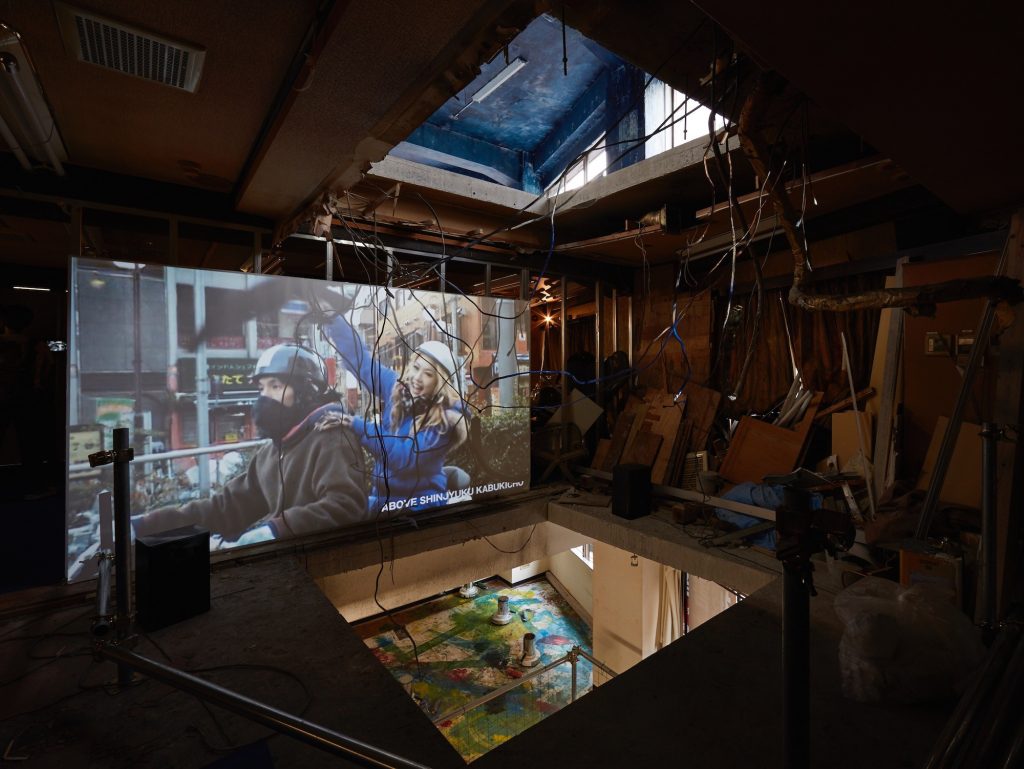
"Scrap and Build" Chim↑Pom’s artworks will not be removed even after the show ends, meaning that this exhibition will be completely destroyed along with the building. Then Chim↑Pom will collect the fragments of artwork- turned-debris that will share the same fate as the building, and reconstruct them. Adding the “C” and “P” neon signs preserved from Shibuya’s iconic fashion mall PARCO, which will also be demolished, they will show the second iteration of this project at their artist-run-space Garter in Kitakore Building early next year. In collaboration with architect Takashi Suo, they will also DIY renovate Kitakore Building, a shack-like space that has existed since before WWII, for the exhibition.
4th floor drawing a blueprint version 2
4th floor RENAISSANCE Charter
3rd floor Black of Death
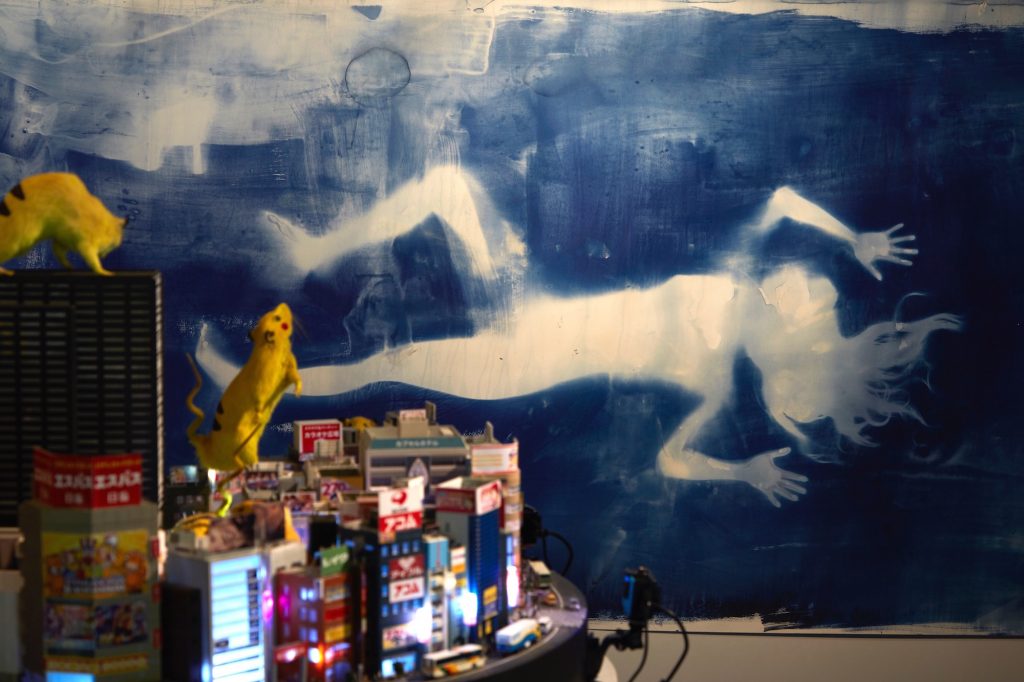
3rd floor SUPER RAT -Diorama Shinjuku-
3rd floor Drawing Mirai
3rd floor Libido-Electricity Conversion Machine "Erokitel" Fifth Version
3rd floor Reflecting on the beauty of a rainbow
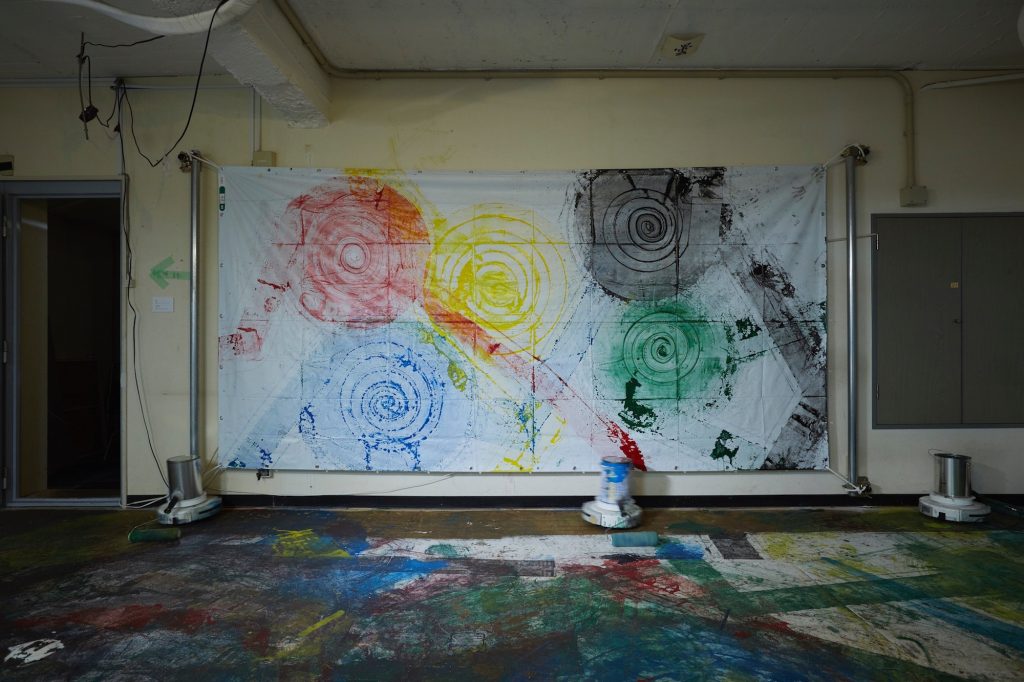
2nd floor Downtown Paradox
2nd floor The people make the city
2nd floor 5 Rings
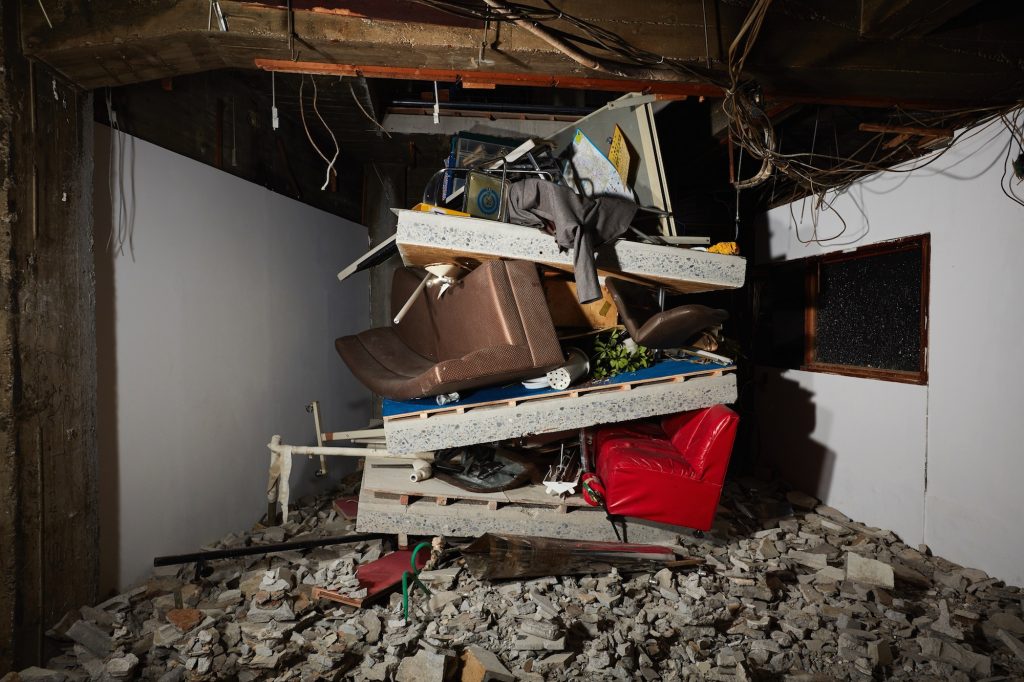
1st floor Build-Burger
1st floor 賽 - offering
1st floor So see you again, tomorrow?
basement JINGI
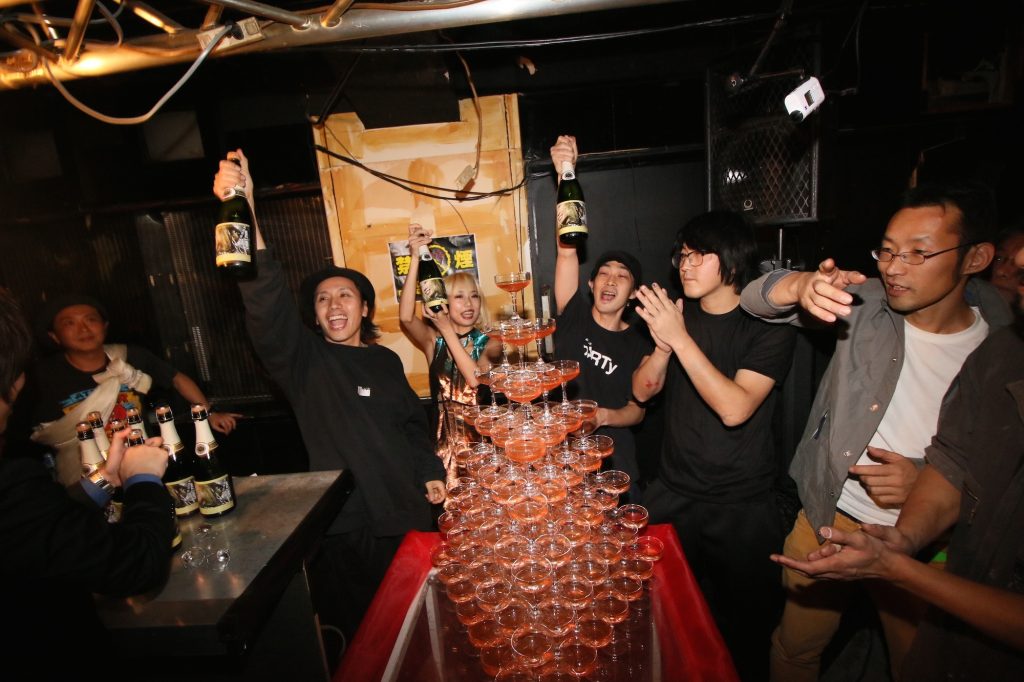
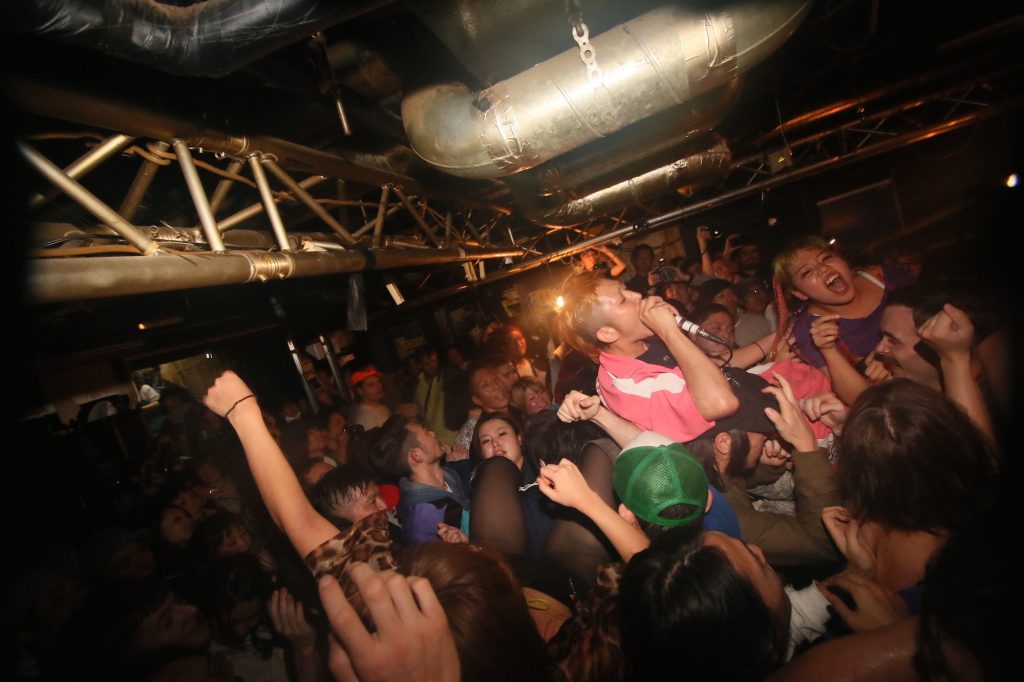
basement ART is in the pARTy at club 仁義
-
Statement
Tokyo’s landscape has drastically started to change in the past few years. While Kabukicho is launching a district- wide reconstruction, Shibuya’s PARCO and Tokyo’s oldest station Harajuku are undergoing renovations, not to mention the constant construction taking place in Shinjuku and Shibuya Station. Coupled with anti-earthquake procedures taken after March 11th, the Tokyo Metropolitan Government has rolled out a major remodeling plan for the city.
The cliché of “rebuilding the city by the 2020 Tokyo Olympics” is being touted as the pretext for everything, aside from just supporting the athletes. In fact, the National Stadium reconstruction issue symbolized this tendency.
Why does it have to be by the Olympics in the first place? Some express concern over recovery efforts in the Fukushima area stalling due to the expected construction rush requiring more workers. However, the government has been appealing to the international community on the significance of the Olympics by calling it “The Recovery Olympics.” Looking back, the 1964 Tokyo Olympics was one of the big turning points for the post-war ruins to develop into the present city of Tokyo. The Olympics presented a vision for Japan, which was still a developing country at the time, to grow into an economic powerhouse through infrastructural and urban development. This exhibition venue, the Kabukicho Promotion Association Building, was also built in 1964 just 5 months before the Olympics.
After suffering a long recession, Japan was recently hit by the Great Tohoku Earthquake. People are trying to superimpose the situation back then onto the 2020 Tokyo Olympics. “People from all over the world will visit...,” “Our economy will improve...” Many positive mantras are reproduced with an ambiguous sense of hope.
What is recovery? What is a city? Was the future of the 21st century meant to repeat a 20th-century vision? Japan has historically continued to “scrap and build” while facing many disasters, and its people have lived alongside this changing cityscape. Through an exhibition itself that experiences a “scrap and build,” we question Japanese people’s method of drawing a blueprint.
Chim↑Pom 2016
-
4th floor drawing a blueprint version 2, 2016
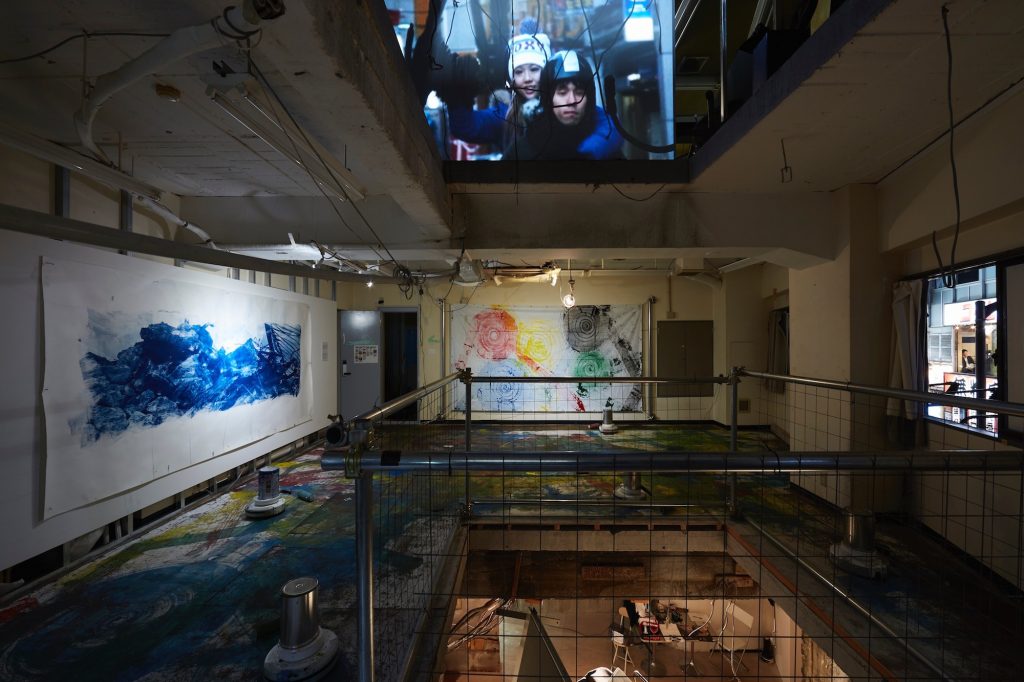
Cyanotype, so-called “blueprint,” was exposed to light and printed in the office of the Kabukicho Shopping District Promotion Association. “Blueprints” have supported architects as prints of architectural drawings in the 20th century, but its demand had fallen sharply in the 21st century. On the other hand, the Japanese idiom “drawing a blue print” is a popularly established saying that is used in the sense of drawing one’s vision for the future. Kabukicho Shopping District Promotion Association has been responsible for promoting Kabukicho for 50 years. The traces of the history of the people who drew the vision of this very city during the 20th century is drawn out as a “blueprint.”
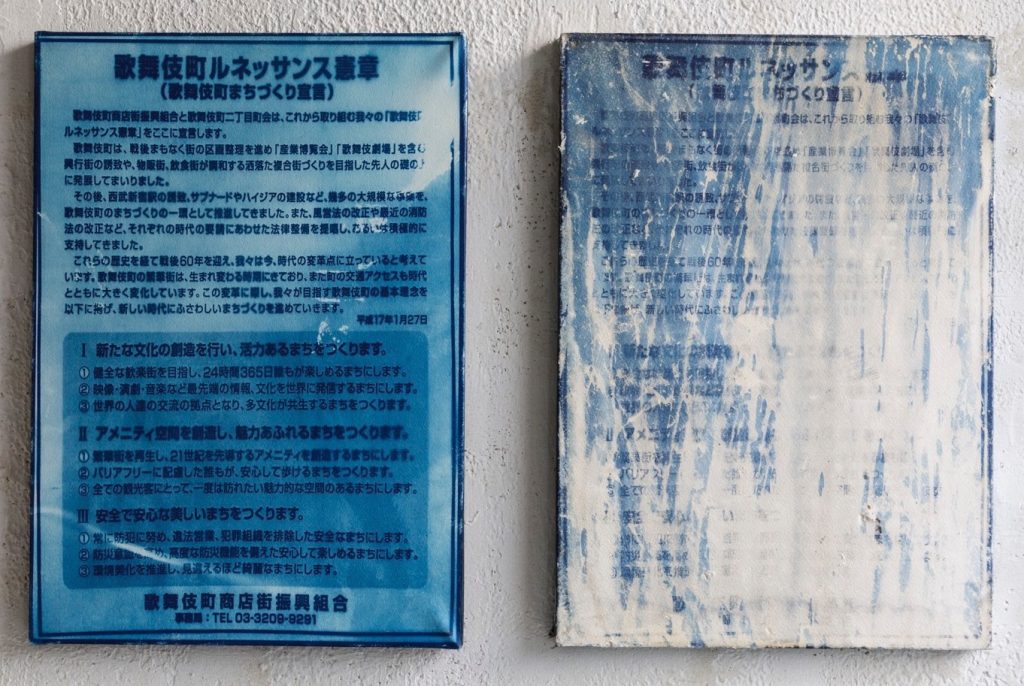
4th floor RENAISSANCE Charter, 2016
As part of the installation for drawing a blueprint version 2, Chim↑Pom created a panel piece using some of the symbolic items found in the office of the Kabukicho Shopping District Promotion Association. The “Kabukicho RENAISSANCE Charter,” along with other community revitalization and town development projects, centers on such initiatives like the “Cleaning Operation Project” that promotes safety and security measures to dispel the stereotype of Kabukicho as a scary and dirty city, in collaboration with the local government, fire department, police, immigration control office, and private institutions. The “Cleaning Operation Project” is also known as the “Kabukicho Cleansing Operation,” which was initiated by the former Governor of Tokyo Ishihara in 2004. The project stood in contrast to the bid to host the Olympics in Tokyo, and has become an important topic in discussing Japan’s gentrification issues.
3rd floor BLACK OF DEATH, 2007, 2013
In this guerrilla art act , Chim↑Pom attracts crows, using a stuffed crow and the recorded sounds of crow calls playing from speakers. Utilizing the natural behavior of crows to save fellow captured crows, we managed to gather many crows in front of Japan National Diet Building and in the busy streets of Shibuya. Crows that infest all over Japan including Tokyo have been evolving and becoming smarter like super rats as they gain nutrition from food waste and improve resistance towards extermination. In 2013, the idea was used again and assembled crows that proliferated whilst feeding on livestock left in the exclusion zone in Fukushima and shepherded them out of the zone.
3rd floor SUPER RAT -Diorama Shinjuku-
‘Super Rat’ is a nickname coined by pest controllers for a new breed of poison-immune rat proliferating explosively in urban area. Super Rats’ ever-evolving ways of coexisting with human beings are also a portrait of Chim↑Pom who started their activity on the city streets.
3rd floor Drawing Mirai, 2016
The silhouette of Kabukicho’s sex worker Mirai (age 18) is printed on the wall using blueprinting. Sex industry, sexual minorities, violence, culture, entertainment and aliens... Kabukicho continued to allow various ways of living. Chim↑Pom depicted the figure of Mirai, with a self claimed name which also means future, in this place where many lives intersect.
3rd floor Libido-Electricity Conversion Machine "Erokitel" Fifth Version
As an alternative to limited resources such as oil, coal or natural gas, this work was invented to provide eternally stable energy by converting “libido” to electricity. Chim↑Pom inserted tiny ads with a phone number on various platforms, camouflaging them as erotic phone line information. Upon receiving a call from unknown male adults who saw those ads, the machine will convert radio waves into electricity by an optical sensor with a relay. The fifth model was created based on power plants, perfect for an "exhibition to be completely destroyed" in post-March 11th Japan.
3rd floor Reflecting on the beauty of a rainbow
Easel, portrait, box seat, business card, chandelier, recorded audio
Chim↑Pom requested host club men to draw portraits of a certain woman. Comparing the recorded voices of the men, known for their skillful complimenting, praising the woman's beauty, and the inevitably inadequate portraits drawn by these amateurs, this piece approaches humanity's proposition on "The Definition of Beauty." The title is a quote by haiku poet Kyoshi Takahama, active in the Meiji through early Showa period and known for proposing the idea for literary magazine "Hototogisu," which was started in the Meiji era and published "Botchan" and "I Am a Cat."
2nd floor Downtown Paradox
A giant painting painted by cleaning robots. The robots endlessly clean yet make the floor dirty with paint, and continue cleaning all over again. Centered on the theme of infinity, karma, and paradox, this piece visualizes downtown graffiti and cleanup movements within the gallery space.
2nd floor The people make the city, 2016
A cyanotype print that was made from a photograph of a plastic mold of Ellie’s head placed in the demolition site inside the building. Based on Kihee Suzuki’s idea “to construct a morally busy district with an entertainment center facing the east” upon returning to the burnt-out ruins of Shinjuku from his evacuation destination after the war, Shinjuku aimed to invite Kabuki-za with the cooperation of Mohee Mineshima, the region’s largest landowner. The city planning section chief, Hideaki Ishikawa, proposed the name “Kabukicho” in hopes of creating a name fitting for a city promoting culture. Although the invitation to locate Kabuki-za in Shinjuku was unsuccessful, Suzuki’s efforts to attract them created the foundation for the current theater district. What Kabukicho’s godfather Ishikawa envisioned was a Western urban structure supported by a democratic civil society with a square at the center that gathered citizens together. Ishikawa believed that a city’s character is dependent on the mind and actions of its citizens, and that the people gathering there create the form of the city. “The city as its people,” Ishikawa would say. (With reference to the website of Kabukicho Shopping District Promotion Association.)
2nd floor 5 Rings
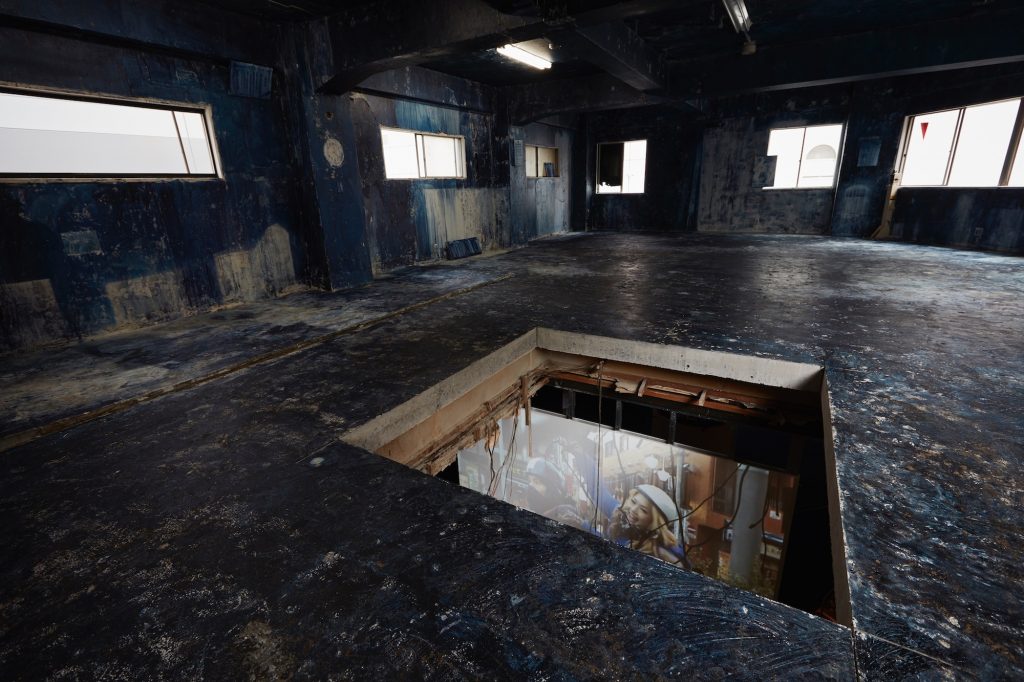
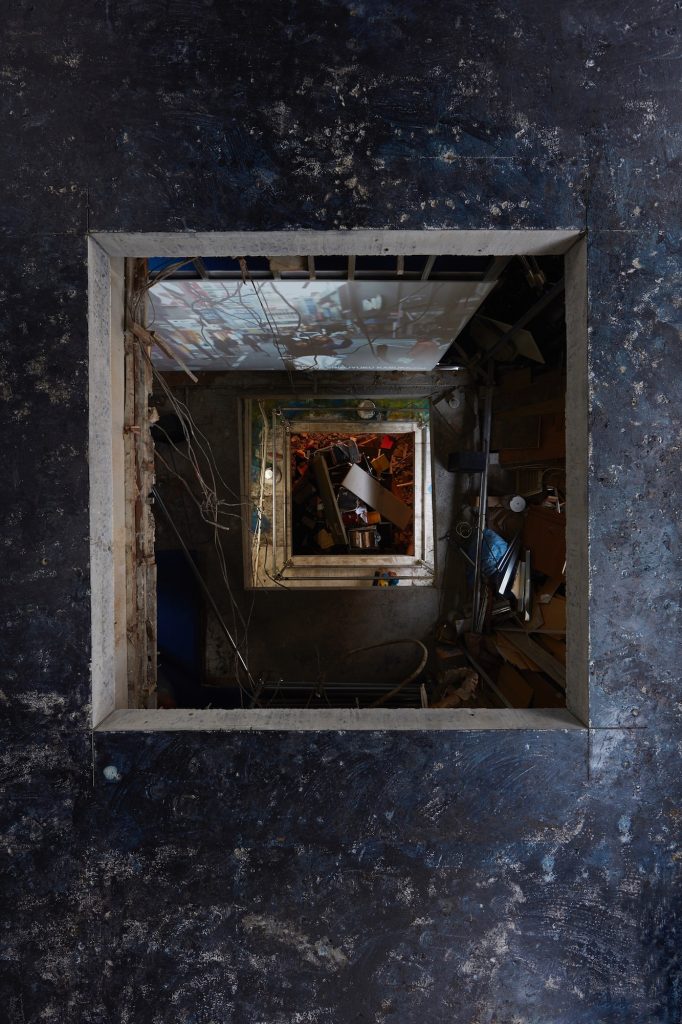
1st floor Build-Burger, 2016
A massive sculpture piece piling the 4th, 3rd and 2nd floors on the 1st floor by cutting the floors out in a square of size 180-220 cm. Through two conflicting processes of “breaking” and “constructing,” it visualizes “Scrap & Build.” Since the sculpture includes various materials from each floor, the title is associated with fastfood- ish mass production and mass consumption in cities.
1st floor 賽 - offering
A collaboration project with the visitors to pile up concrete rubbles chipped from the building by themselves. It originates from an infinite loop action from a story of purgatory, in which a dead child piles stones to make a tower at the Styx for the parents’ soul but an ogre breaks it down, and Kshitigarbha (a bodhisattva) helps the child so the child can begin to pile the stones up again. This work includes the theme “Scrap and Build” as well as “the Build-Burger” but also focuses on the process itself of “Never-ending architecture”.
1st floor So see you again tomorrow, too?, 2016
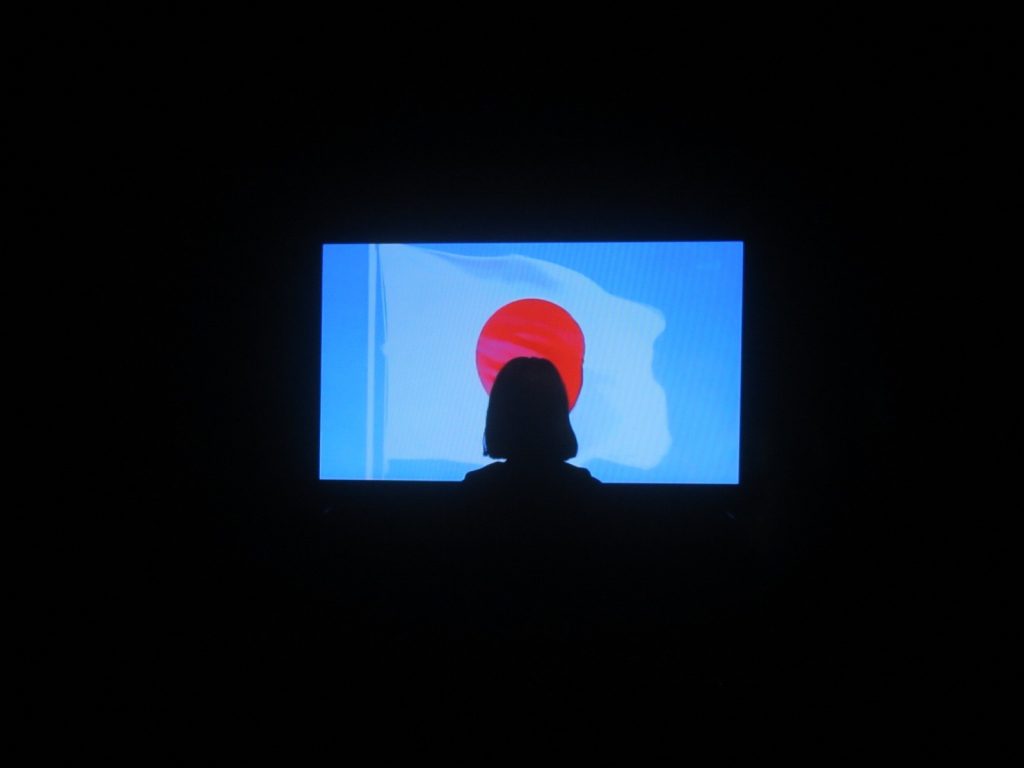
In 2014, at the end of the final episode of a nationally popular TV show “Kazuyoshi Morita Hour Waratteiitomo!” that had continued for over 30 years, the host Tamori (Kazuyoshi Morita) wrapped up the show with his well-known phrase “So see you again tomorrow, too?” despite the fact that it was the last show. Similar to this “routine,” NHK (Japan’s public broadcasting organization) played the national anthem and showed the national flag at the end of the show everyday, to wrap up the day. This piece of work has the same name as the exhibition title “So see you again tomorrow, too?,” which was held as the last show of the building. It brings forward the question of the way of future existence to the audience, as they are sandwiched between the inevitable “end” and the continuous “tomorrow.”
basement JINGI
One of the series of frottage of famous people’s gravestone. This frottage is taken from legendary yakuza Rikio Ishikawa who was active in black market of Shinjuku in 1940’s. He killed his own boss and killed himself in prison. Although he was called a traitor who betrayed “Jingi,”which means humanity and justice, he left a will to inscribe the word “Jingi”on his gravestone. He is the model for the film “Graveyard of Honor (1975)”by Kinji Fukasaku.
basement ART is in the pARTy at Club 仁義