


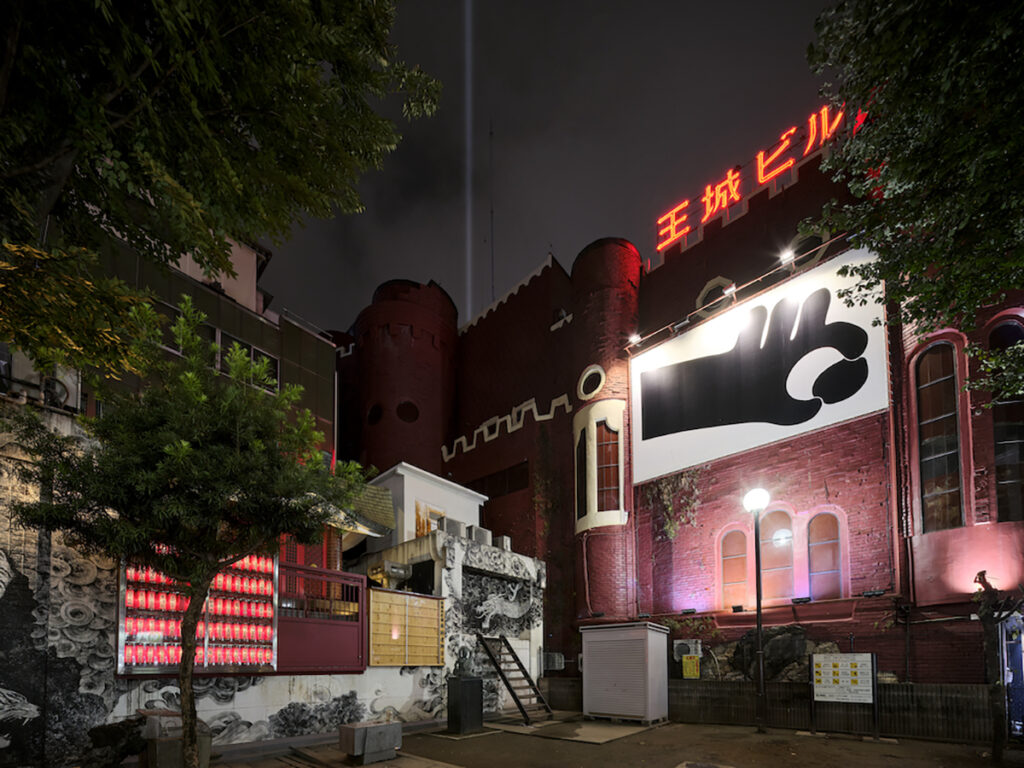
<outside> Kabukicho Park, A sacred place in Kabukicho dedicated to Benzaiten, a deity associated with water, due to the land being a reclaimed swamp. It is also known as Kabukicho Benzaiten. As the basis of the area, it continues to retain its appearance amid the ever-changing landscape, and represents the spirituality of the
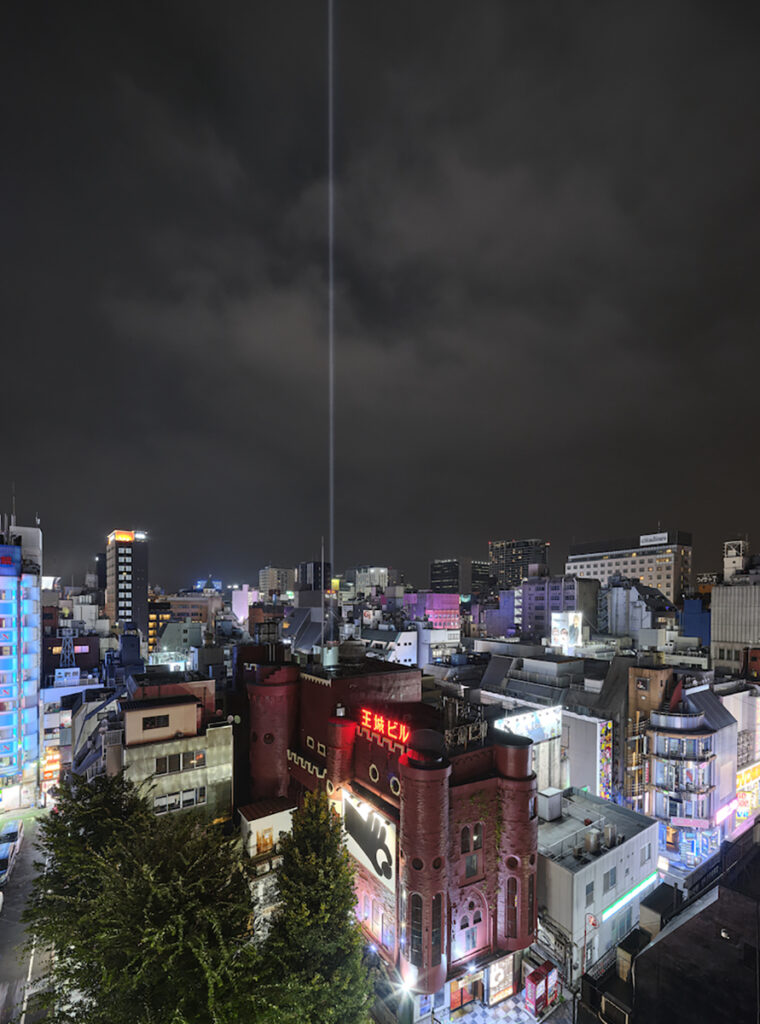
Kabukicho Park, A sacred place in Kabukicho dedicated to Benzaiten, a deity associated with water, due to the land being a reclaimed swamp. It is also known as Kabukicho Benzaiten. As the basis of the area, it continues to retain its appearance amid the ever-changing landscape, and represents the spirituality of the "damp place" that nurtures the entertainment district. (Photo by Kenji Morita)
<outside> Nest (Naraku), 2023, An old rat nest, which remains at the back entrance of the Ohjo Building, is casted using jesmonite. (Photo by Kenji Morita)
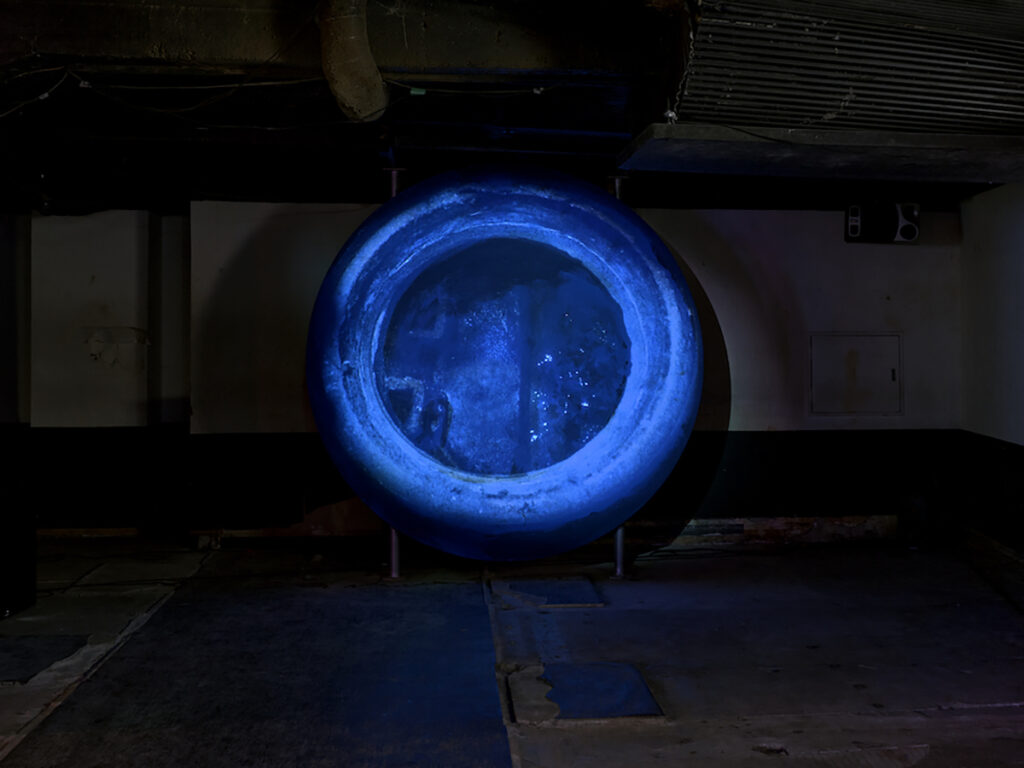
Nest (Naraku), 2023, An old rat nest, which remains at the back entrance of the Ohjo Building, is casted using jesmonite. (Photo by Kenji Morita)
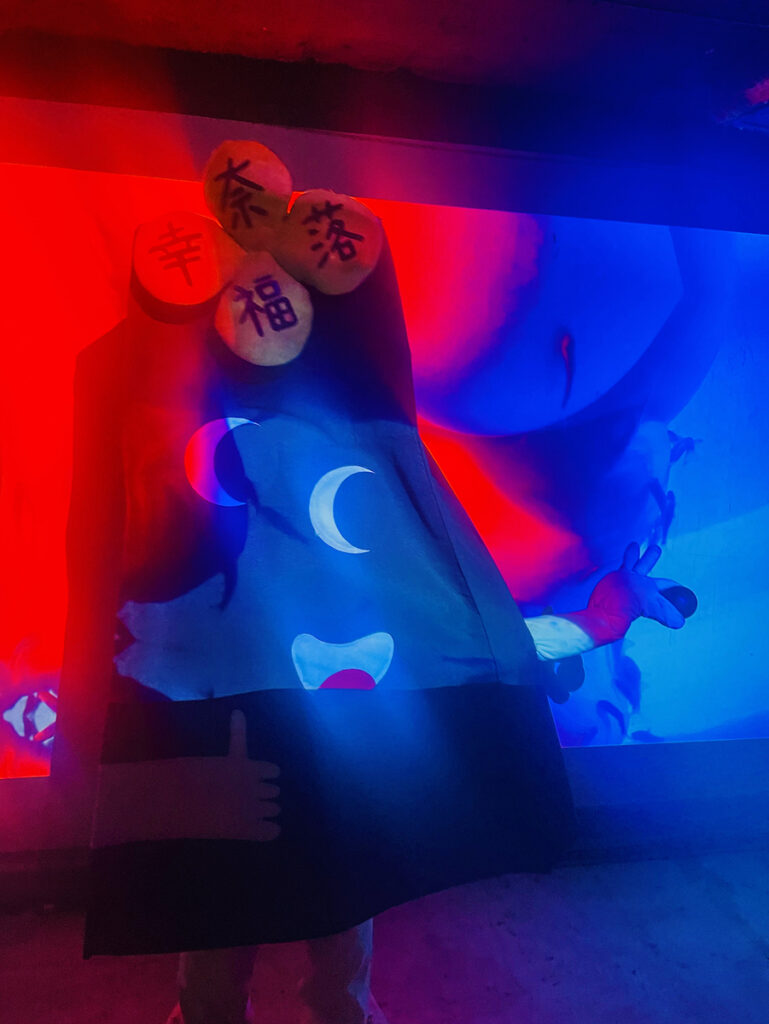
<All Floors> Na-Lucky, 2023, Kigurumi costume, performance
Na-Lucky, 2023, Kigurumi costume, performance
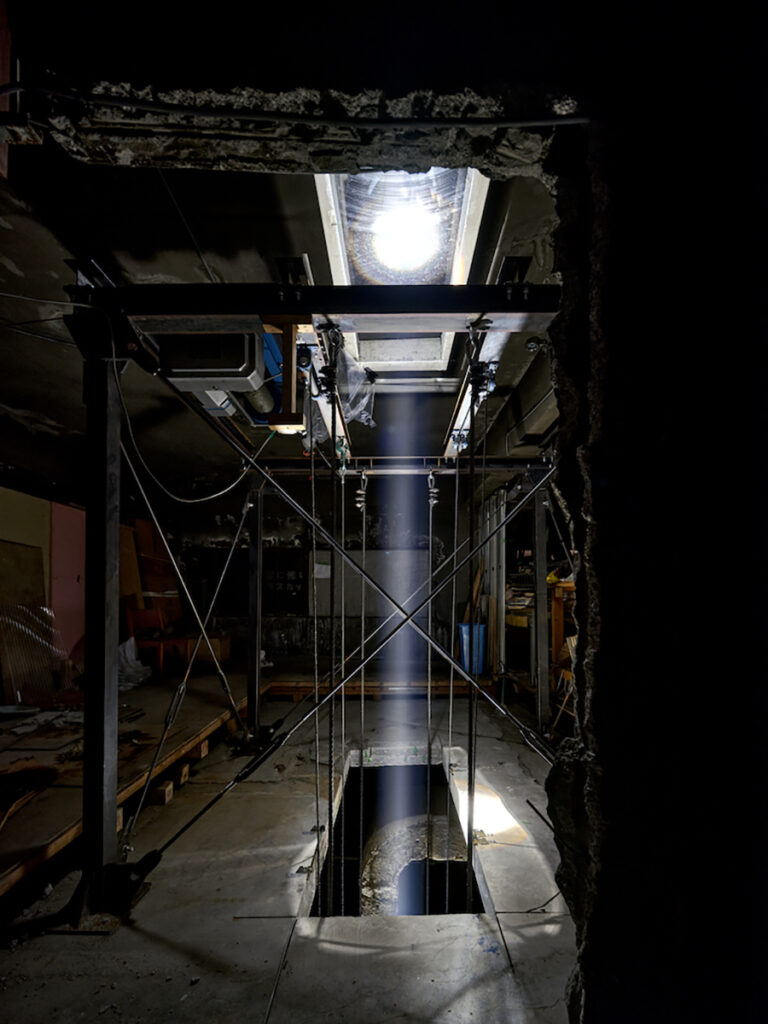
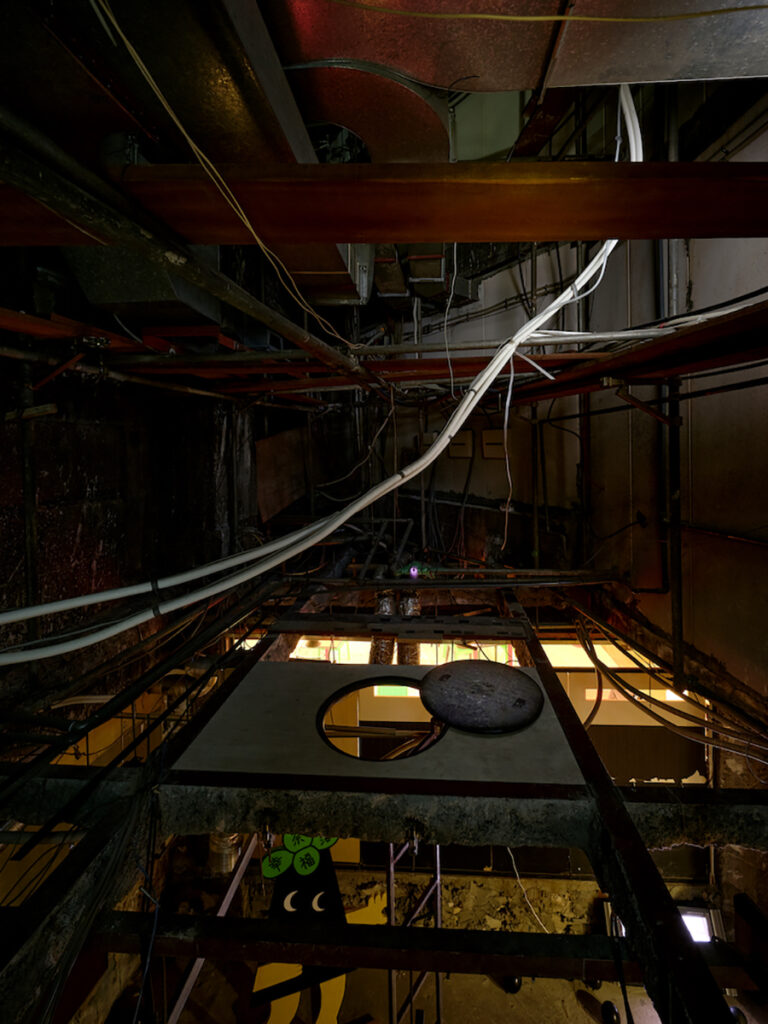
 <2nd Floor> Naraku, Site-specific installation, Focusing on the fact that the name Kabukicho comes from a failed postwar city plan to attract the Kabuki-za Theater, Chim↑Pom from Smappa!Group sets a naraku in the atrium space of the Ohjo Building that had been closed for about 30 years. The word naraku, which means hell in Buddhist terminology, has been associated with dark swamps and holes, as the people who work there were once called
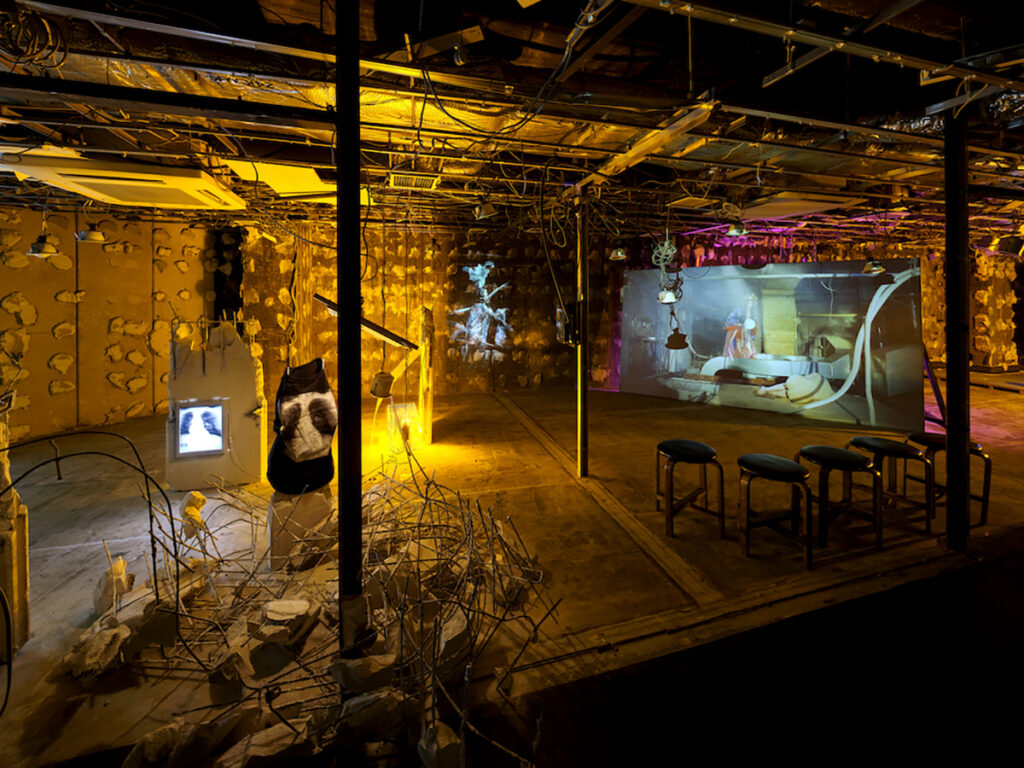
<2nd Floor> Naraku, Site-specific installation, Focusing on the fact that the name Kabukicho comes from a failed postwar city plan to attract the Kabuki-za Theater, Chim↑Pom from Smappa!Group sets a naraku in the atrium space of the Ohjo Building that had been closed for about 30 years. The word naraku, which means hell in Buddhist terminology, has been associated with dark swamps and holes, as the people who work there were once called "anaban," or literally “hole guards.” In this work, the space is filled with the sound of a kabuki performance recorded in the naraku during Ken no Kai, a self-organized performance by Ukon Onoe, and the cut slabs on the fifth floor and the rooftop are moved up and down as a seri, or an elevator-type mechanism used to raise and lower a portion of a kabuki theater stage. The seri is equipped with searchlights, which go around once an hour and extend a ray of light towards the sky above. In addition, the second floor floor (or the first floor ceiling) is dismantled. The concept of a closed naraku is extended to all four directions toward the neighborhood and the sky. (Photo by Kenji Morita)
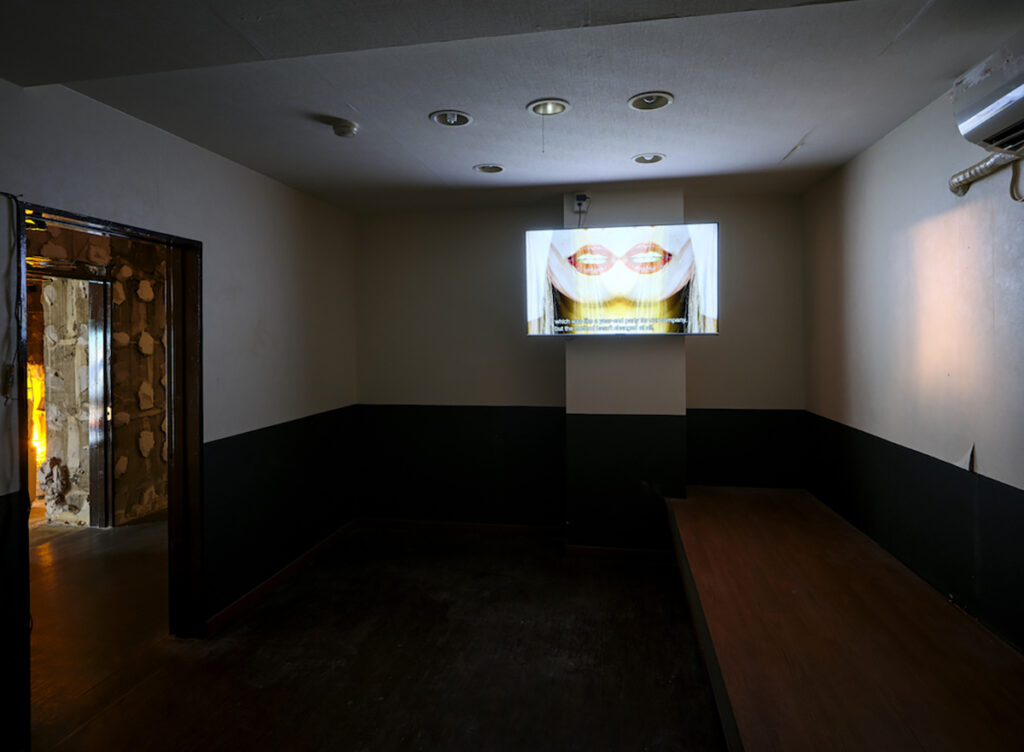
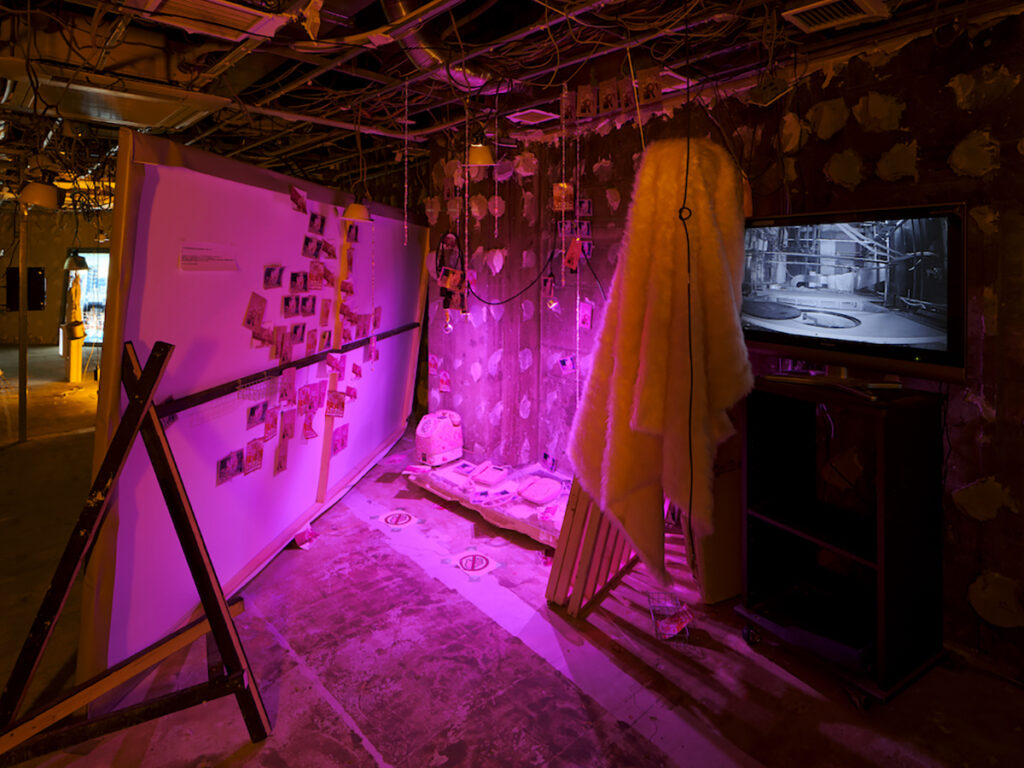
<2nd Floor> The Beginning, 2023, Chim↑Pom from Smappa!Group + Osamu Matsuda, Video installation, A conversation between Oi-chan, who oversees casting for the Kabukicho Festival, and Ellie, who is friends with Oichan, is recorded and reconstructed by superimposing their voices onto Ellie’s mouth. Oi-chan is known in the industry as a unique casting director, but does not appear much in the media. Focusing on the mysterious persona of Oi-chan, the video introduces the special qualities of the Kabukicho Festival and its performers. (Photo by Kenji Morita)
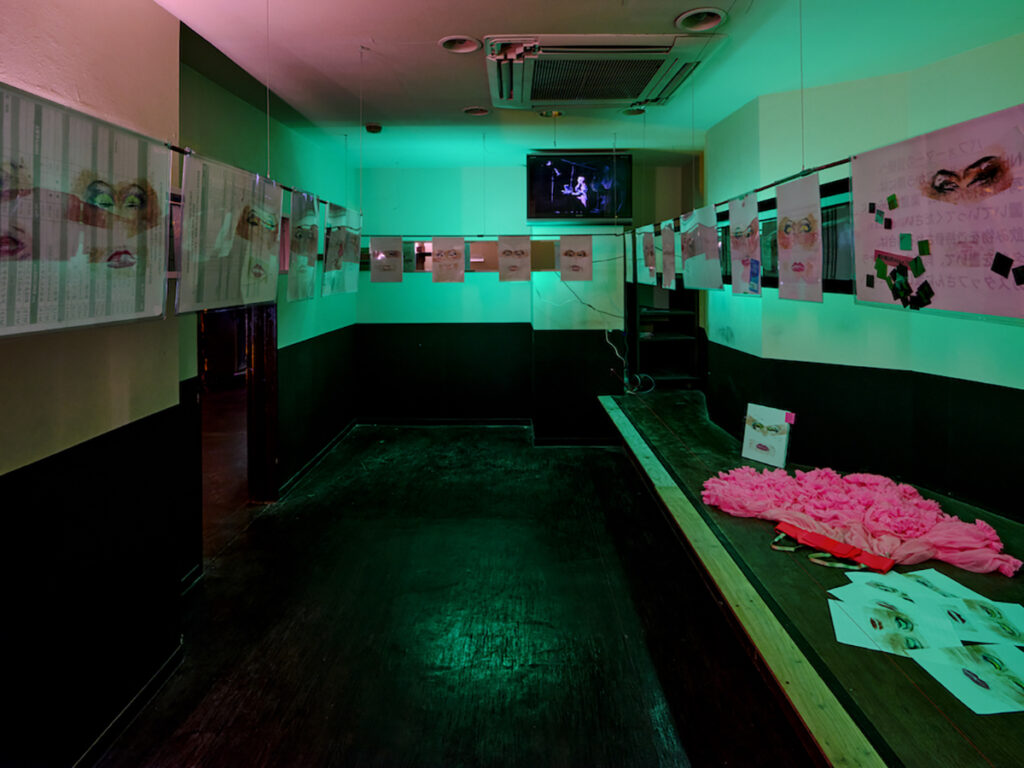
<2nd Floor> MONDO, one of Japan’s pioneering drag queens, has been continuing gantaku, or face printing. This exhibition will be the first to feature MONDO's personal practice as an artwork. Unlike kabuki’s kumadori, which uses cloth as a support, makeup is peeled off and transferred onto transparent tape, which is pasted on the back of paper handouts found in dressing rooms. The work shows MONDO’s connection with MISIA, who has been featuring drag queens in the mainstream scene for many years. (Photo by Kenji Morita)
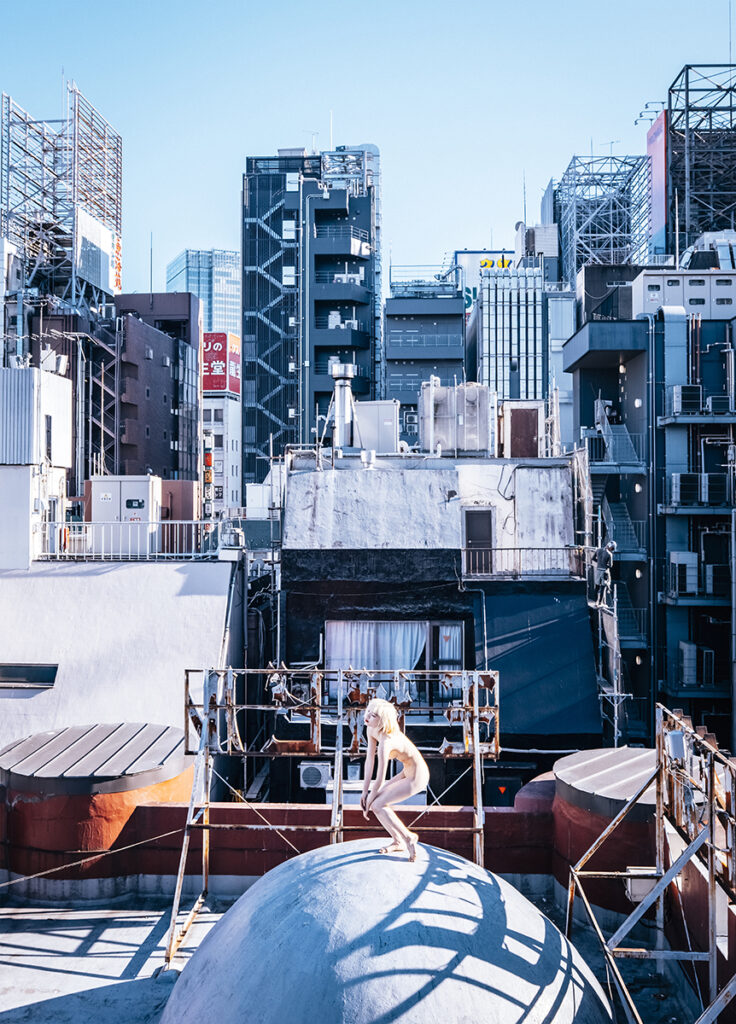
<2nd Floor> Nude photographs by Aoi Yamada, who is an artist that spans the mainstream, such as the Olympics or movies, and the underground. Yamada interprets the naraku as a hole and sees its femininity and symbol as a uterus, developing nude photoshoots that overlap the body and the naraku as “existences that serve an important role but remain under the surface.” (Photo by Mumuko)
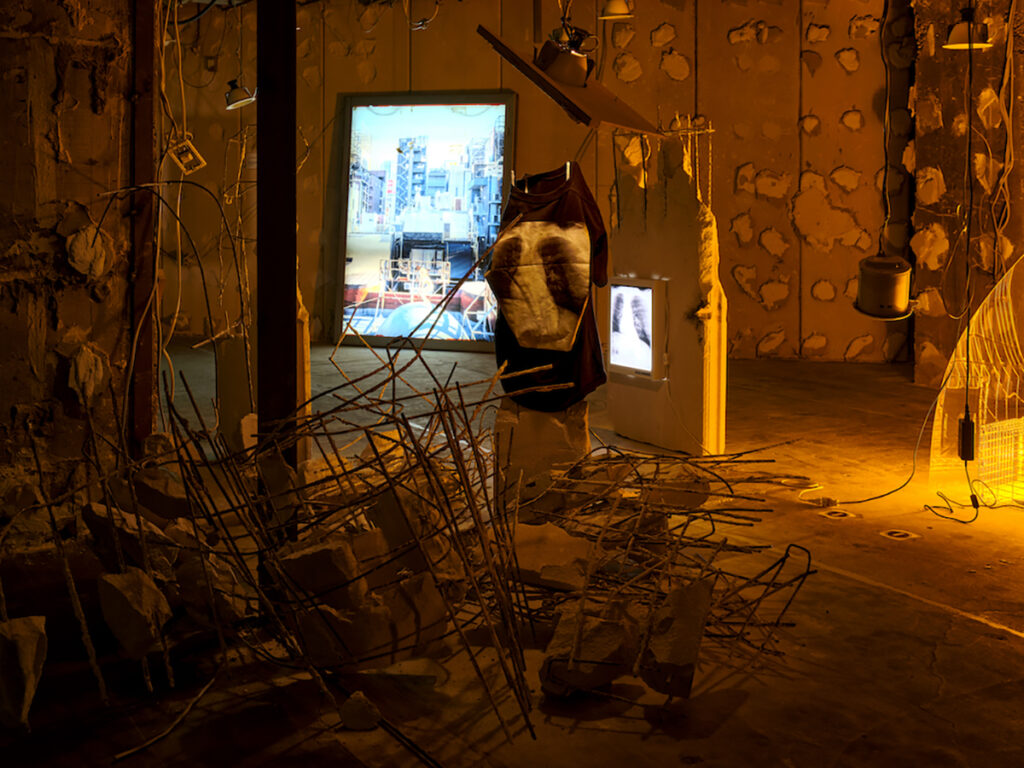
<2nd Floor> Wheelchair dancer Kenta Kambara, who is born with a bifurcated spine, interprets the searchlight as the building’s spine and sees a connection with his own body. He compares the process of cutting a hole in the building and allowing light to extend in a straight line into the sky to the “building’s surgery.” Here, he exhibits his x-ray photograph and a T-shirt he made for himself with the image printed on it. (Photo by Kenji Morita)
<2nd Floor> The Making of the Naraku, 2023, Multi-channel projection, Documentation of an action conducted by all performers at the naraku. The performance in the closed space, and that in the opened up space, where performers expand the notion of the naraku, intersect. (Photo by Kenji Morita)
<2nd Floor> Using the telephone as an icon, MoshiMoshi CHULIP keeps waiting for communication with a fictional being. The photos taken in the first half are used as advertising material that is randomly scattered on the streets in the second half, spreading the telephone number of the Ohjo Building around. This performance even includes the answering machine waiting for calls. (Photo by Kenji Morita)
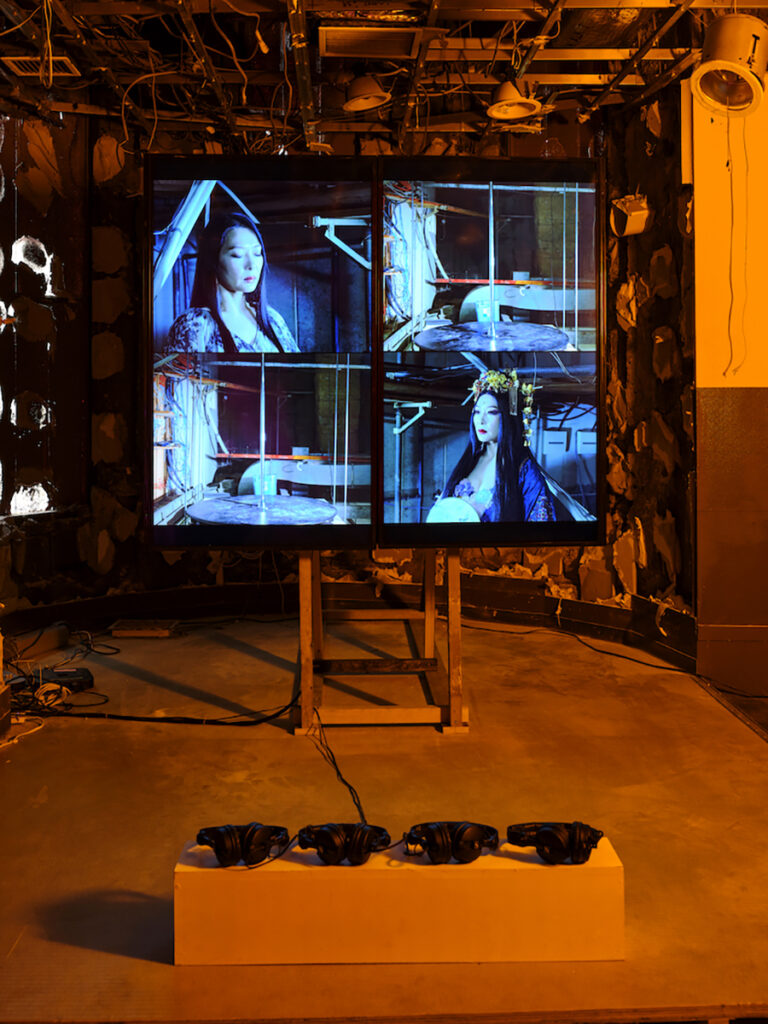
<2nd Floor> I, 2023, Chim↑Pom from Smappa!Group + KUMI + Constant Voisin, Video installation, In this exhibition, Benzaiten is played by the pole dancer KUMI. She has performed as Benzaiten together with Tuki Takamura at Yoshiwara, Kabukicho, and Nihonbashi, and says she feels ties with the worship of Benten at each of these places. KIMI plays the role of a divinity transcending “I,” but underlying this performance was a struggle with “I” as a third-generation Korean residing in Japan. She confessed that, when she performed at a festival on the eve of the opening of the Tokyo 2020 Summer Olympics, she continued to question the relationship between what was a national project and her own status. The most direct confrontation with this thorny issue came when she danced to “Kimigayo,” the Japanese national anthem, in a supporting role in Sekai no Hate (which translates “the end of the world”), a work for which Tokyo Gegegay won first prize in the DANCE@HERO competition. This act was grounded in the bonds of trust with MIKEY, the troupe’s leader, and exerted an immense impact on KUMI from then on. However, the mental tussle resurfaced when the idea of dancing “Kimigayo” was raised again. The issue was the subject of repeated discussion with Chim↑Pom and Constant Voisin, a French video artist residing in Japan, and the consultation continued right up to the day before the scheduled shooting. On that day, “Kimigayo” played in the naraku, and the camera recorded the expressions of both the KUMI staring at the performerless pole and the KUMI playing Benzaiten. (Photo by Kenji Morita)
<2nd Floor> A video featuring the burlesque dancer Kily Shakley, based on the accidental death of a performer with the Takarazuka company after a fall into the naraku (theater basement). Although the naraku is a safe zone for performers because, unlike on the stage, they cannot be seen by the audience there, it is also a dangerous one holding the risk of a fall. As a showgirl, Shakley talks about how, by getting on stage, performers are indeed risking their lives not only mentally but also physically. (Photo by Kenji Morita)
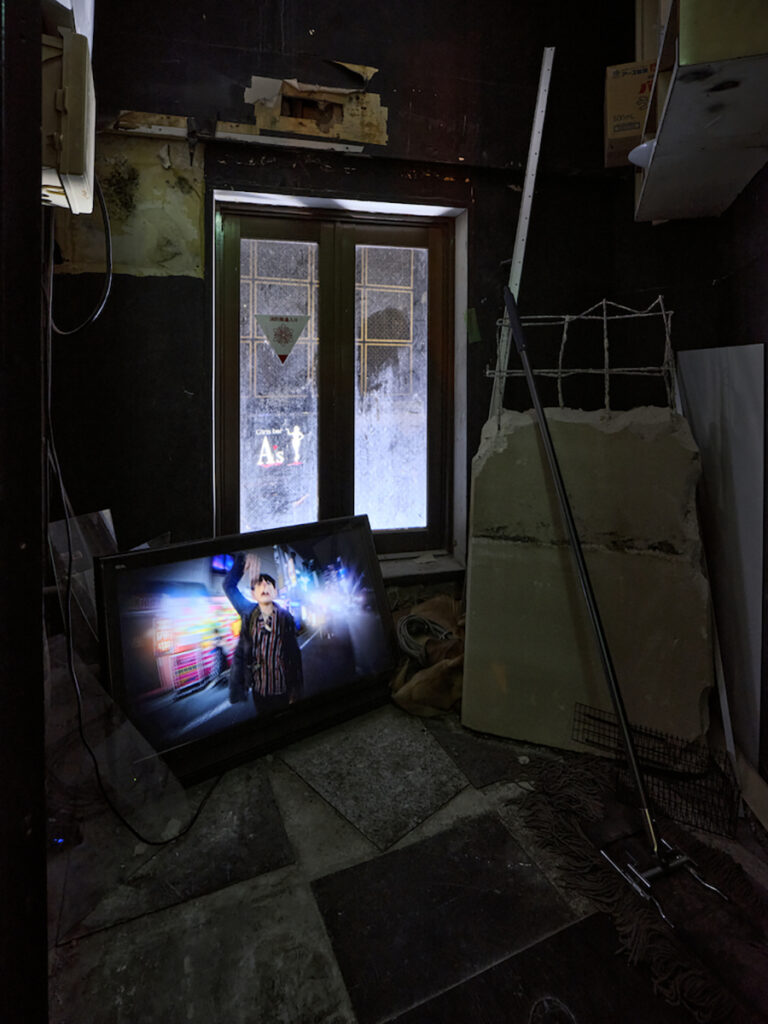
<2nd Floor> Using special makeup to look like a crow or rat, KELO Hirai wanders the streets as a rat and gets into the naraku through cracks in building walls and manholes. Footage of him slipping through openings is displayed here and there in the venue. (Special makeup: Amazing Jiro, Photo by Kenji Morita)
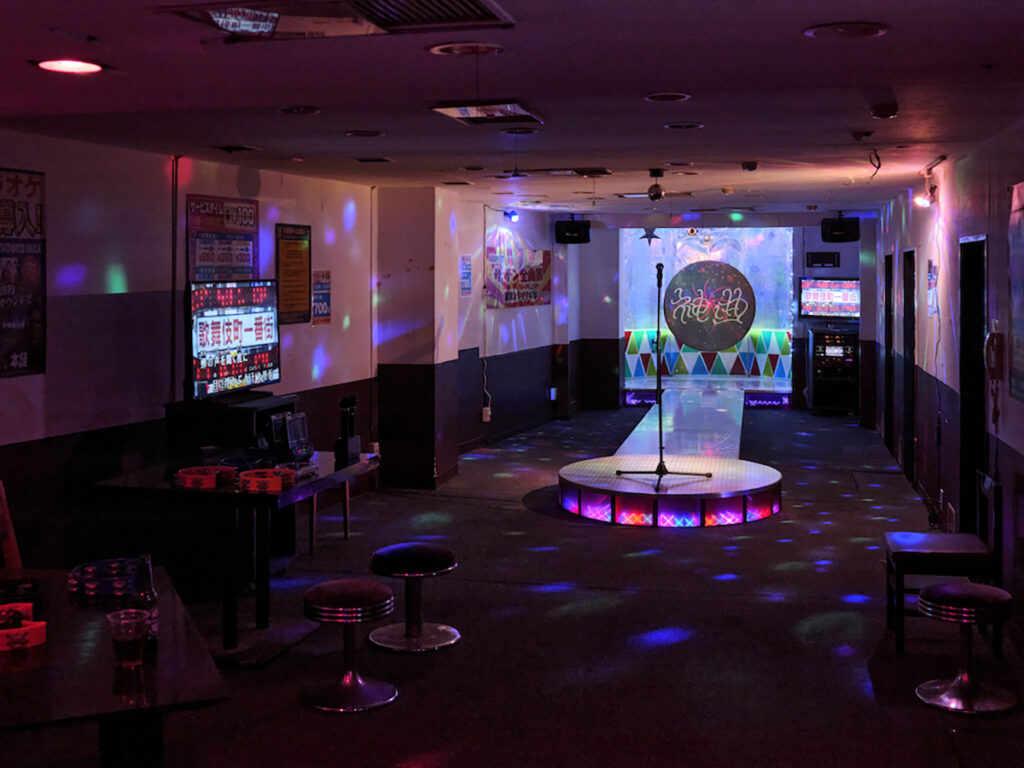
<4th Floor> La Divina Commedia, 2023, Karaoke party room, multimedia, Ohjo once commanded immense popularity for its karaoke izakaya tavern. Room 402 was remodeled into a karaoke party room. Visitors who receive a binder on which the room number is written at the front entranceare entitled to sing as much as they want in this room. (Photo by Kenji Morita)
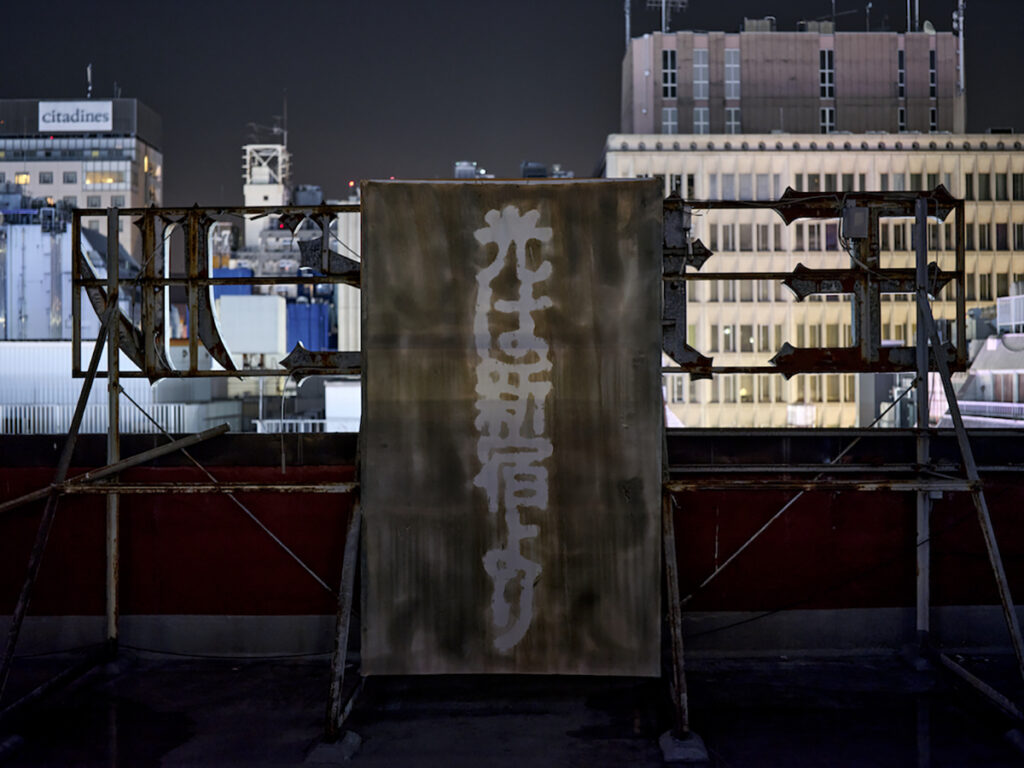
<5th Floor Rooftop> Hikari wa Shinjuku yori, 2023, Cyanotype, billboard, The beam of a searchlight visible at night, shooting up to the sky from the naraku. On the right is a billboard made with cyanotype, emblazoned with the words hikari wa Shinjuku yori (the light starts from Shinjuku). Wartime air raids transformed the whole Shinjuku district into a field of burnt-out ruins. Right after the war, the Kanto Ozu gang prepared the land, put up telephone poles, and set up the Shinjuku Market, the first black market in postwar Tokyo. The aforementioned words were the slogan that the gang put in newspaper ads and in markets in order to promote their purchase of materials. (Photo by Kenji Morita)
(Photo by Kenji Morita)
<First lower level> Asshole of Tokyo, 2019, video, sound, The event floor. Taking water flowing underground as its theme, this is a video work that Chim↑Pom made by shooting sewerage under manholes in Tokyo. Its title was used for the name of a club. It has the double entendre of “anus for evacuation of metropolitan bowels” and characterization of Chim↑Pom from Smappa!Group as “Tokyo jerks.” During the run of the show, Smappa!Group is going to hold a number of musical and fashion events. (Photo by Kenji Morita)
Asshole of Tokyo, 2019, video, sound, The event floor. Taking water flowing underground as its theme, this is a video work that Chim↑Pom made by shooting sewerage under manholes in Tokyo. Its title was used for the name of a club. It has the double entendre of “anus for evacuation of metropolitan bowels” and characterization of Chim↑Pom from Smappa!Group as “Tokyo jerks.” During the run of the show, Smappa!Group is going to hold a number of musical and fashion events. (Photo by Kenji Morita)
<First lower level> Feed, 2023, culture pond, video, restaurant, Naraku also means “hell.” Inspired by the idea of “eat and be eaten,” this project consists of the culturing of doctor fish, which are fed on human corneous tissue, and their preparation as food served at Ningen Restaurant on the first floor. The show visitors and event participants can have the fish remove corneous tissue as long as they want. (Photo by Kenji Morita)
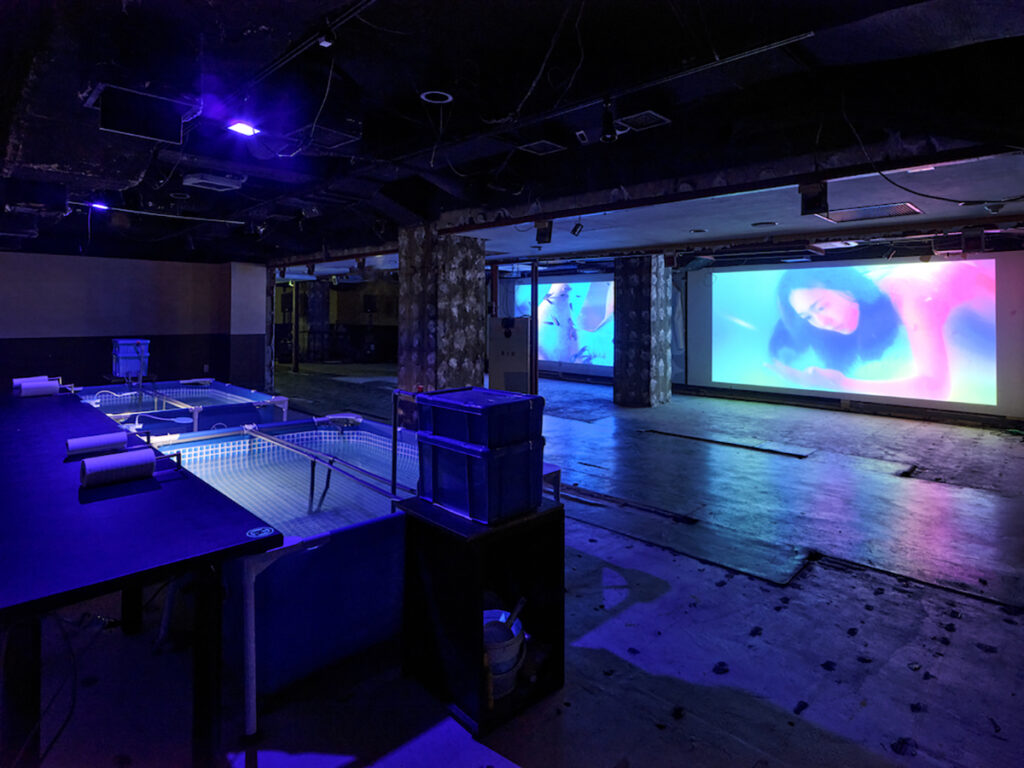
Feed, 2023, culture pond, video, restaurant, Naraku also means “hell.” Inspired by the idea of “eat and be eaten,” this project consists of the culturing of doctor fish, which are fed on human corneous tissue, and their preparation as food served at Ningen Restaurant on the first floor. The show visitors and event participants can have the fish remove corneous tissue as long as they want. (Photo by Kenji Morita)
<First floor> Hole, 2023, Site-specific installation, Chim↑Pom tore out the floor in the atrium space on the second floor, for a seamless connection with the first floor and linkage between the street and the naraku. (Photo by Kenji Morita)
Hole, 2023, Site-specific installation, Chim↑Pom tore out the floor in the atrium space on the second floor, for a seamless connection with the first floor and linkage between the street and the naraku. (Photo by Kenji Morita)
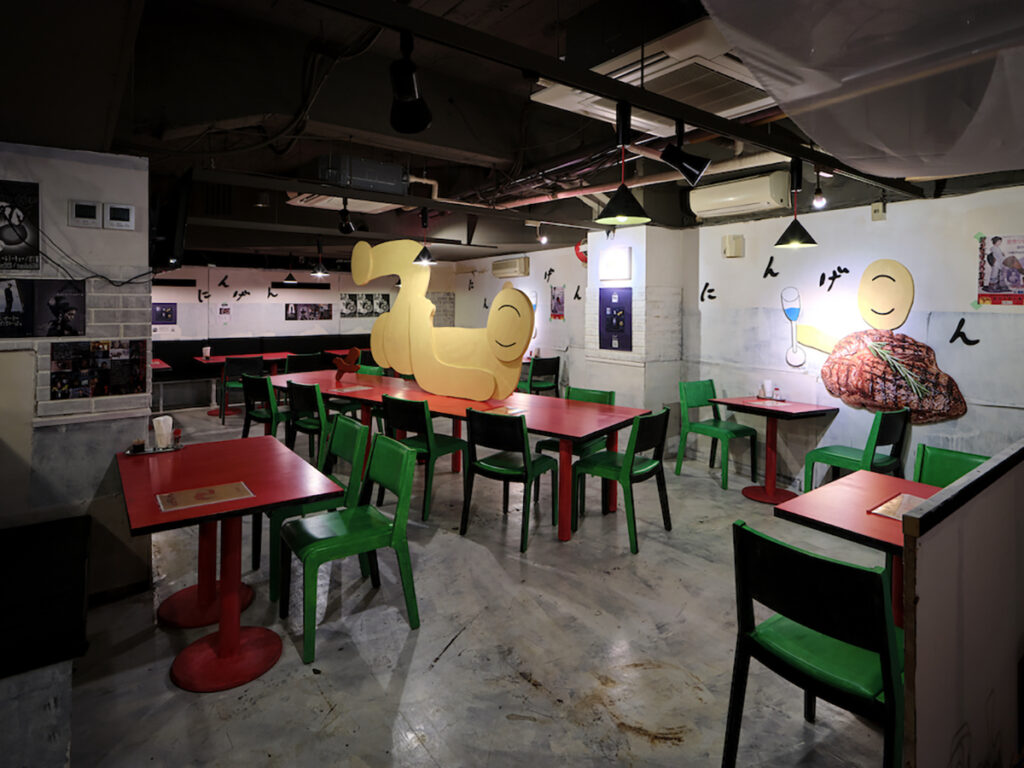
<First floor> Ningen Restaurant, 2019, 2023, Installation, This is a pop-up site of Ningen Restaurant, a performance-based restaurant project that Chim↑Pom first opened on the ruins of the Kabukicho Book Center in 2018. The original was the Ningen restaurant that Smappa!Group set up in front of the former robot restaurant (ningen meaning “human”). This pop-up is in the nature of a museum cafe and dedicated to food. The menu includes last meals that ordered by inmates before their execution in the United States, naraku box lunches, and doctor fish cultured in the basement. The restaurant also displays archive footage of the Kabukicho Festival together with commercials for the 2023 installment. (Photo by Kenji Morita)
Ningen Restaurant, 2019, 2023, Installation, This is a pop-up site of Ningen Restaurant, a performance-based restaurant project that Chim↑Pom first opened on the ruins of the Kabukicho Book Center in 2018. The original was the Ningen restaurant that Smappa!Group set up in front of the former robot restaurant (ningen meaning “human”). This pop-up is in the nature of a museum cafe and dedicated to food. The menu includes last meals that ordered by inmates before their execution in the United States, naraku box lunches, and doctor fish cultured in the basement. The restaurant also displays archive footage of the Kabukicho Festival together with commercials for the 2023 installment. (Photo by Kenji Morita)
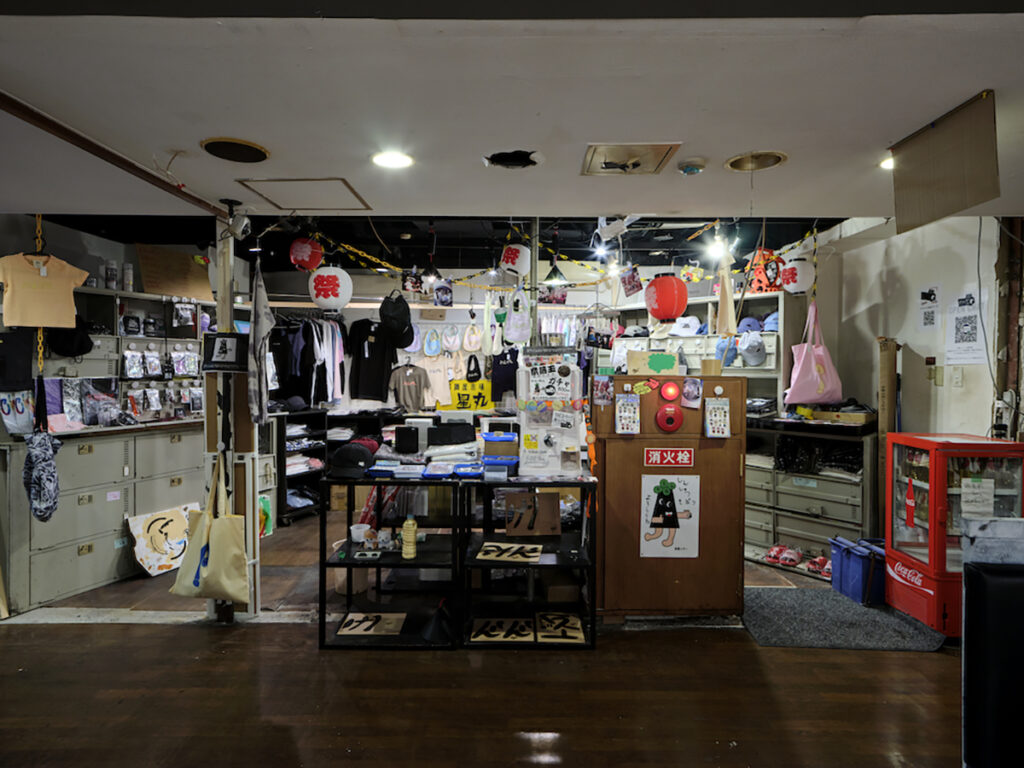
<First floor> A pop-up store of KANE-ZANMAI, a shop project that Chim↑Pom has continued to execute since 2014. Previous ones were opened at Kitakore Building in Koenji, Akihabara 3331, Mori Art Museum in Roppongi, and Shibuya Parco. This time, it is being opened as a museum shop in Ohjo Building. The shop probes the boundary between works ordinarily traded at high prices and merchandise whose prices are determined by the market, and oscillates between economic value and worthlessness. (Photo by Kenji Morita)
A pop-up store of KANE-ZANMAI, a shop project that Chim↑Pom has continued to execute since 2014. Previous ones were opened at Kitakore Building in Koenji, Akihabara 3331, Mori Art Museum in Roppongi, and Shibuya Parco. This time, it is being opened as a museum shop in Ohjo Building. The shop probes the boundary between works ordinarily traded at high prices and merchandise whose prices are determined by the market, and oscillates between economic value and worthlessness. (Photo by Kenji Morita)
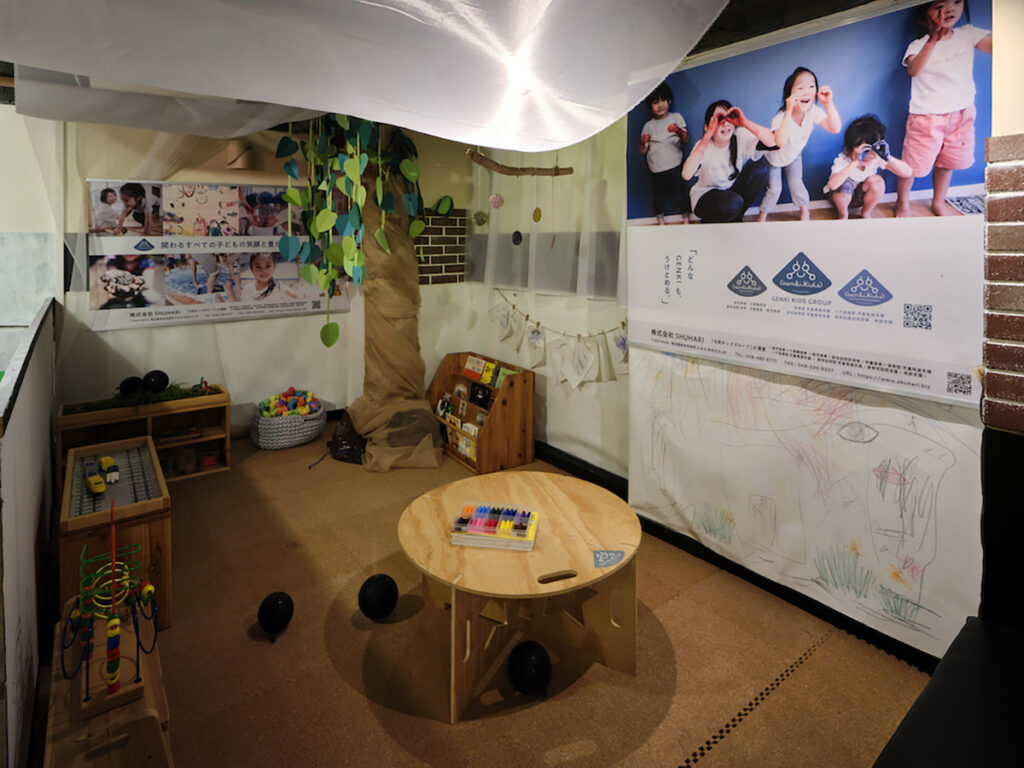
Kids room, Produced by Genki Kids  (Photo by Kenji Morita)
Kids room, Produced by Genki Kids (Photo by Kenji Morita)
Na-Lucky (2023)

A project held at Kabukicho’s Ohjo Building in collaboration with the building. The theme was “naraku” (the end) and works were created together with the Kabukicho Festival, Kabuki actor Ukon Onoe, and many musicians. The exhibition was a performative one in which the artworks transformed through the use of and intervention by the audience and performers. The Ohjo Building is an old structure adjacent to Kabukicho Benzaiten (Kabukicho Park), the guardian deity of the town. It continued to operate independently under various businesses until March 2020, but closed in the wake of the pandemic. After that, a voluntary organization, the Kabukicho Art Center Concept Committee, was formed, and this project became its inaugural work. Tied to the unveiling of the site-specific installation "Naraku" in the four-floor atrium, which had been closed for 30 years, the project included an exhibition, performances, music, a restaurant, and a store. Similar to a one-month-only museum by Chim↑Pom from Smappa!Group, a multifaceted cultural facility was temporarily set up.