


From the official website
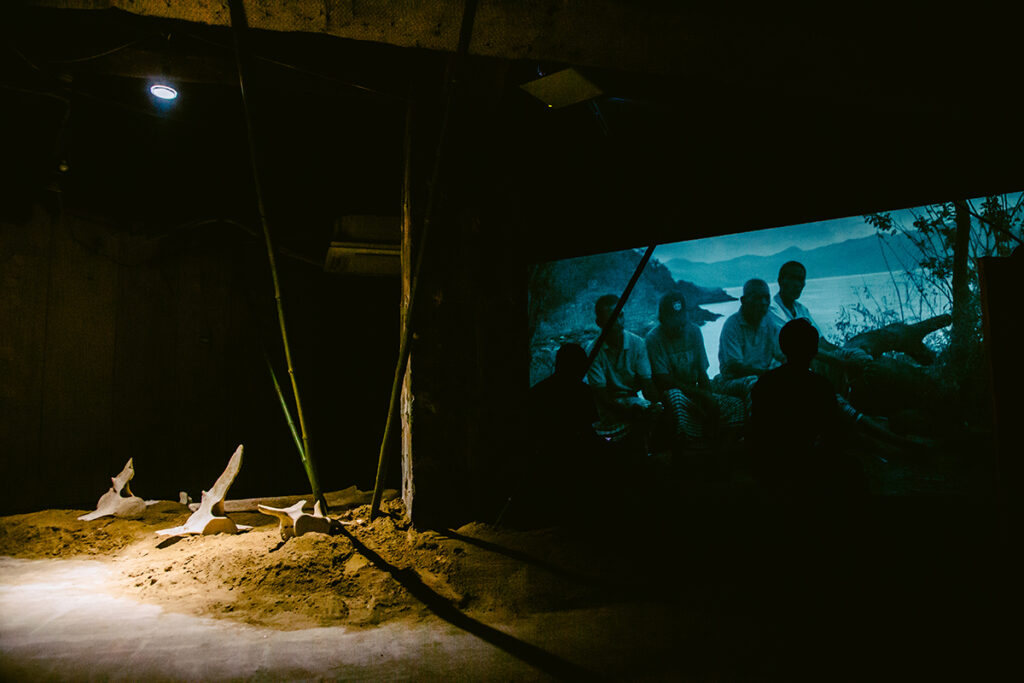
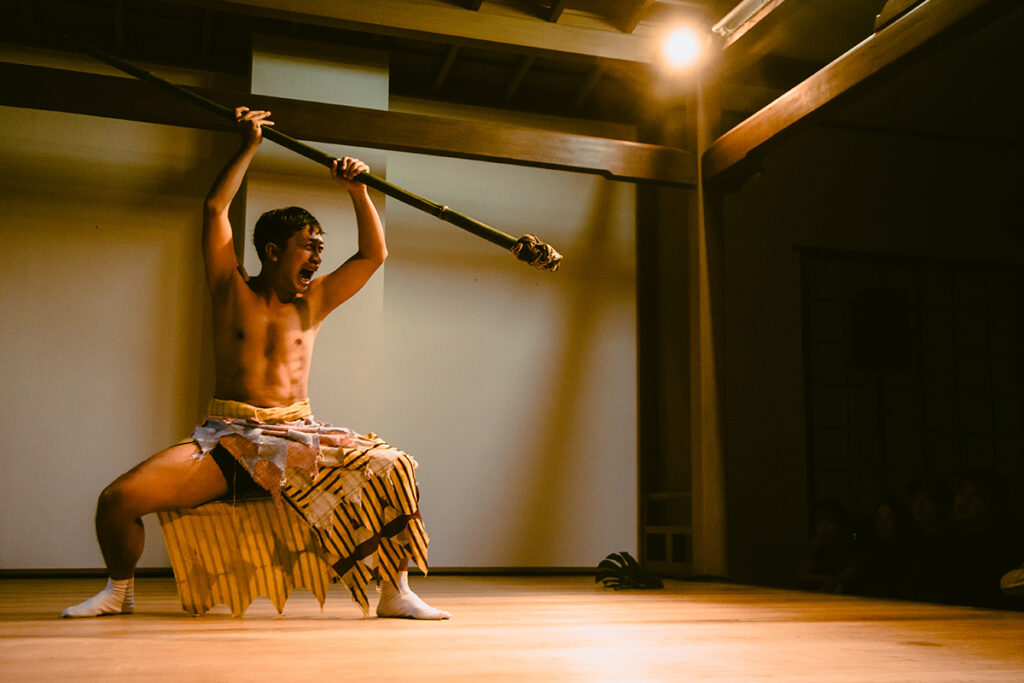
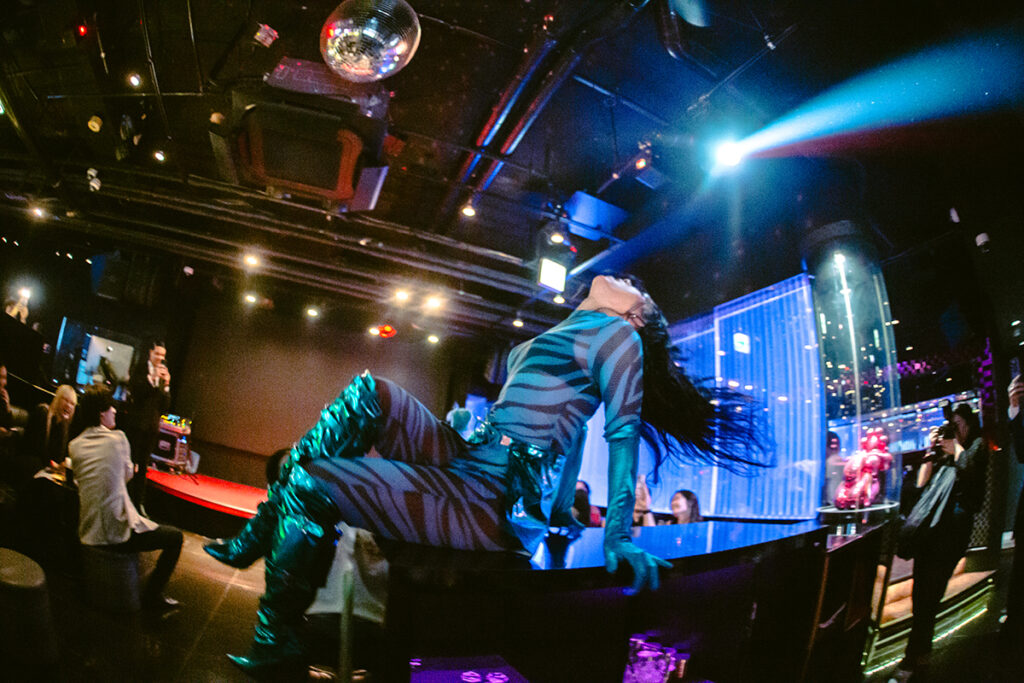
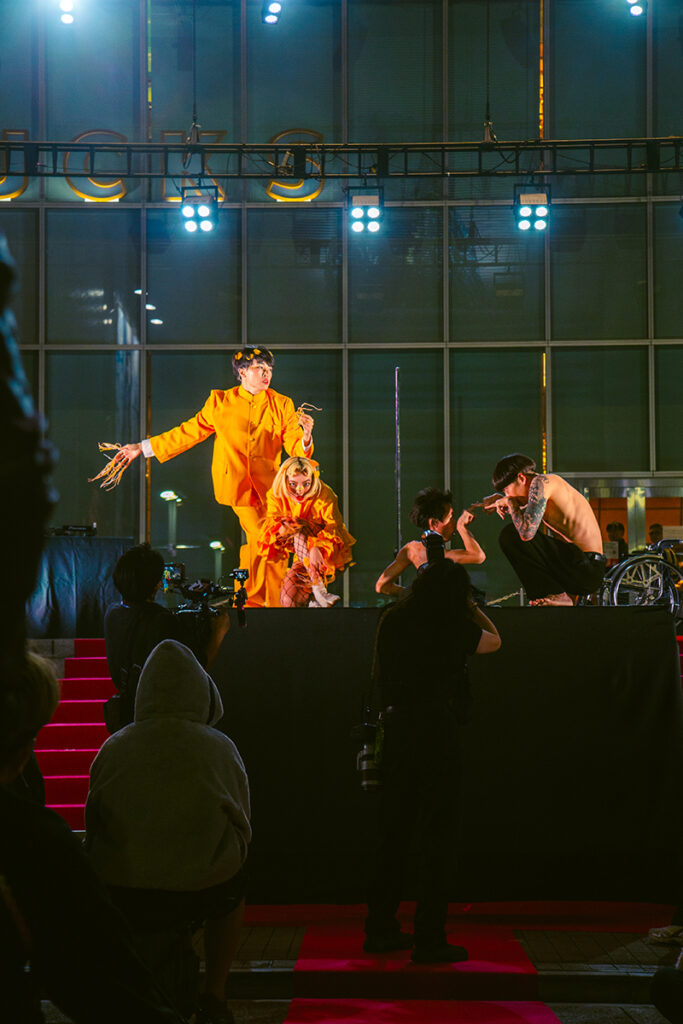
Program: Ohjo Bldg. (A)-①Chen Tianzhuo Solo Exhibition | Cheng Tianzhuo, known as the Asian Dope Boys, will use two floors of the Royal Castle Building to create a spectacular installation. He and dancer Siko Stiyanto have turned a ritual into a performance, inspired by the traditional whaling in the village of Lamarela, Indonesia. In this exhibition, these elements are composed as an exhibition, creating a majestic landscape. The village tradition of pursuing whales and the intersection of faith and culture is now threatened by the waves of modernization, and is shown to be in danger of coexistence and survival. (Photo by SHUN UEHARA)
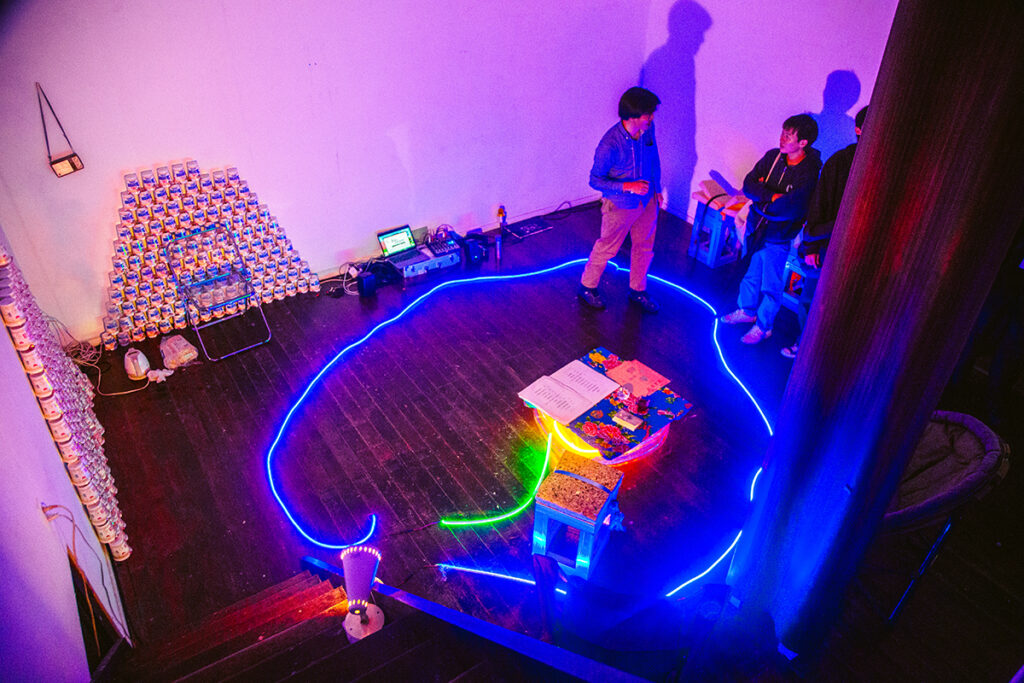
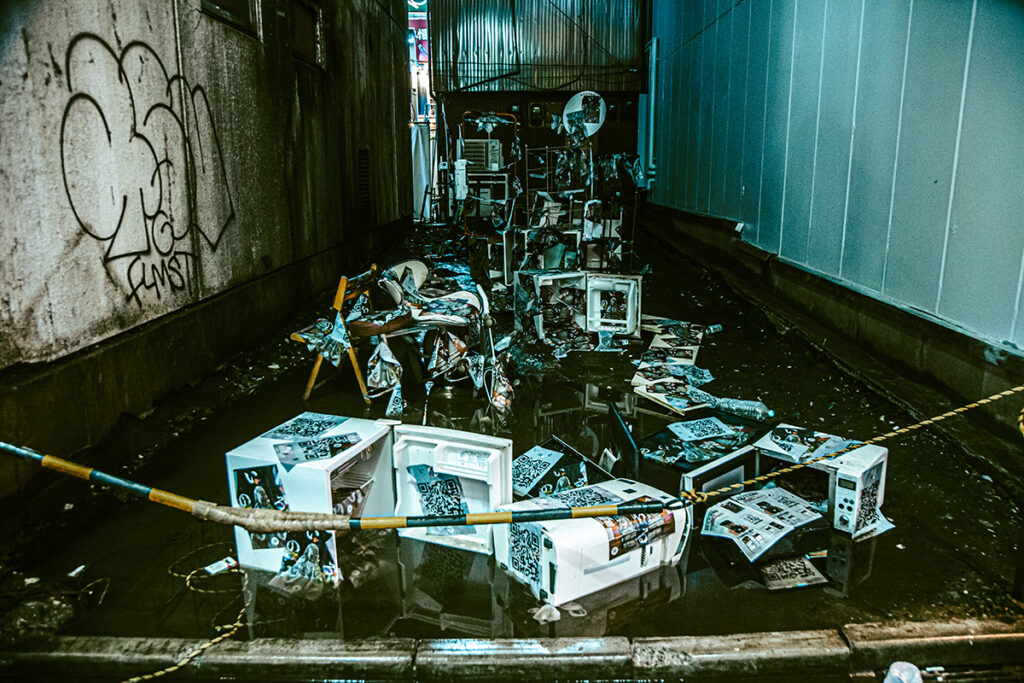
Program: Ohjo Bldg. (A)-②messenger from hell | The title of the exhibition “messenger of hell” comes from Sayako Kishimoto, a neo-Dada organizer who ran for the House of Councillors in 1983 and called herself a “messenger from hell. Kishimoto accepted “hell” as people's suffering and expressed her readiness to bear that burden. Her struggle against the male-centered society in which she lived has become an important motif in art criticism in recent years. In 2023, Chim↑Pom from Smappa!Group will also present “Na-lucky,” a project in which Kabukicho will be likened to an abyss (hell). The project positioned Shinjuku's art history as an instantaneous one that occurred on the streets, in bars, and in abandoned buildings, and raised the affinity between physical expression and a city that has sold bodies and services rather than goods. In 1994, “Shinjuku Shonen Art” was held, and about 84 groups of young artists hijacked Kabukicho. Most of the performances were staged on streets, bus stops, vacant lots, and coffee shops. The work that Makoto Aida will be performing again this year is part of this project. Ten years later, in 2004, Shiro Masuyama installed an experimental work next to the Ohjo Building, in which he allowed passersby to peer into his own image. This work explored the context of street aesthetics in Kabukicho. This exhibition explores the meaning of “hell,” which has been the stage for happenings and bodies in this town where both positive and negative events continue to occur on a daily basis. (Photo by SHUN UEHARA)
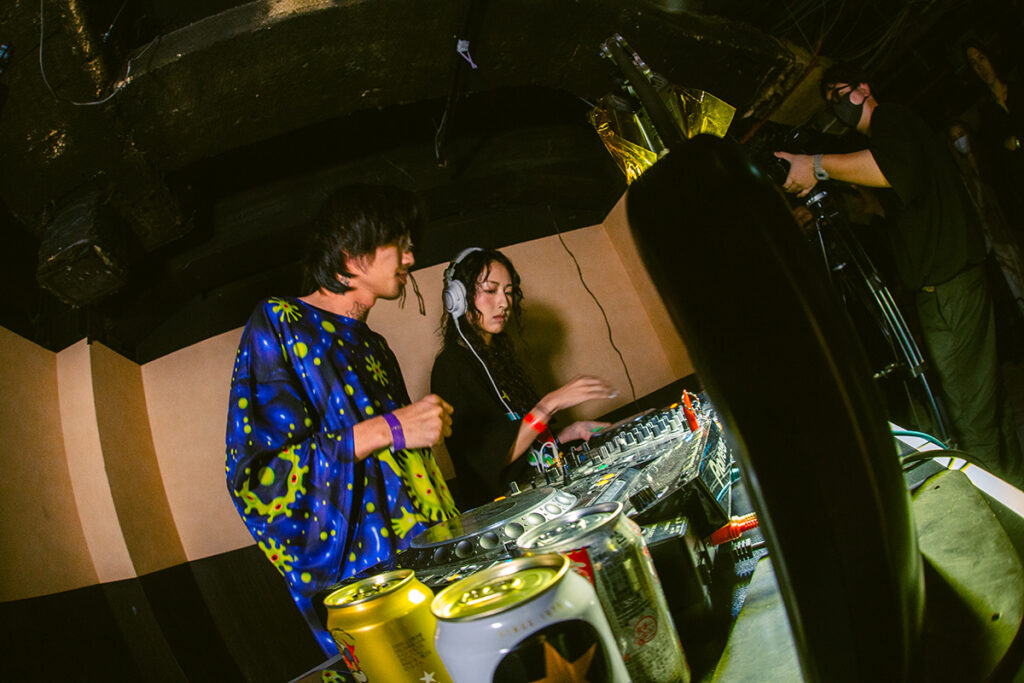
Program: Ohjo Bldg. (A)-③GLOBAL HEARTS | Produced by Global Hearts, the company behind the popular Shibuya clubs Sound Museum Vision and Contact, which sadly closed in 2022, as well as other DJ bars, the two nights will bring together artists who have appeared at Contact, such as Goth-Trad and Jun Inagawa. and Jun Inagawa, who have also appeared at Contact. (Photo by SHUN UEHARA)
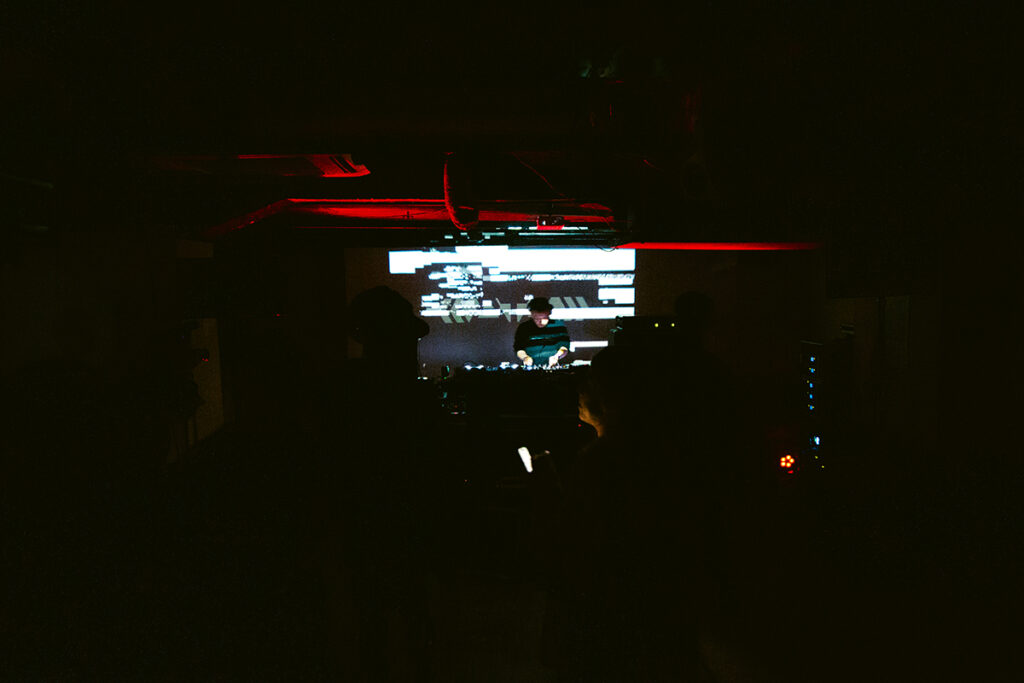
Program: Ohjo Bldg. (A)-④”DOMMUNE KABUKICHO” SAELLITE STUDIO | A site-specific core satellite studio unique to Kabukicho, organized by DOMMUNE led by Naohiro Ukawa. (Photo by SHUN UEHARA)
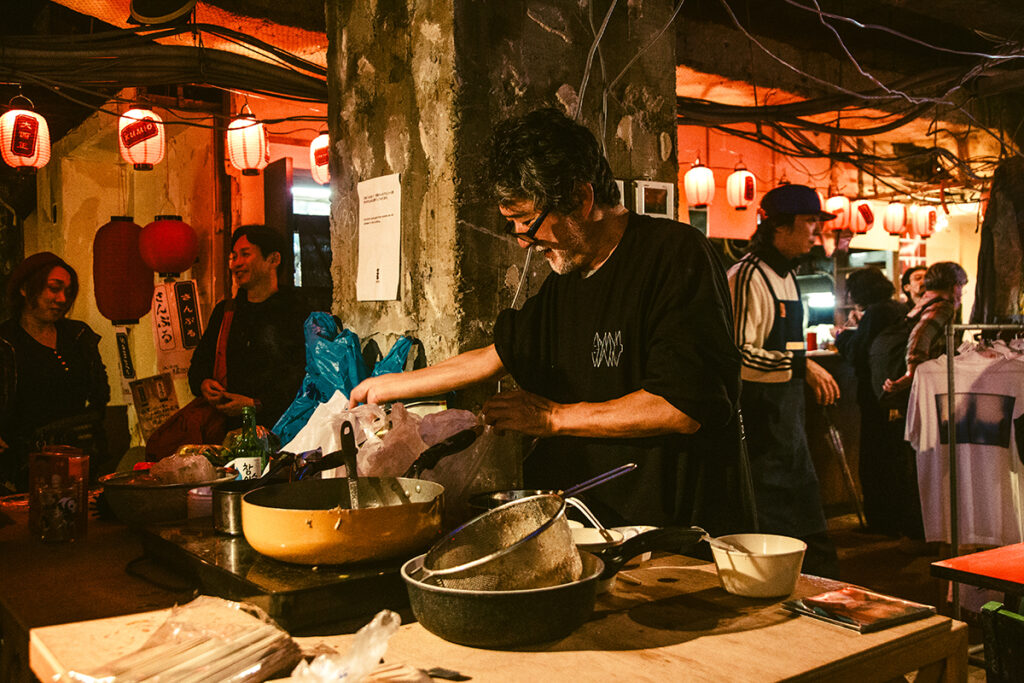
Program: Ohjo Bldg. (A)-⑤A-Yoko | As an alternative to Tokyo's ever-increasing number of side streets due to the redevelopment boom, artists and the art community will gather for a side street event that will feature food, drink, performances, and merchandise sales in the Ohjo Bldg. from 22:00 until the morning. Aiming to be a place where people can enjoy themselves loosely, the ideal is “as much as possible,” so there is a possibility of selling out or closing early, but on the other hand, there is also the prospect of lingering and spending the whole morning. Basically, the event will have its own unique charm, with artists who focus on good food and fun scheduled to open their stalls. “A-Yoko,” Makoto Aida will serve a special hotpot given to him by a friend in Chongqing, arranged mildly for Japanese people, and “Quick Experiment Land” will be opened by Quit Halfway (Tochu de Yameru/Hikaru Yamashita), which aims to match customers with the theme of making money through clothing. Group's “KANE-ZAMMAI” will release FAKE products in collaboration with “THE FOUR-EYED,” a select store in the innermost part of Kabukicho. Kinsanmai will also feature a special drink by cult-favorite creator “BOKUNOU”. From the art space UGO, which used to exist in Okubo, the UGO Organizers Committee will provide white hot water (a concept) as “UGO's hot water room. Under the slogan “Let's drink some hot water and take a break,” an oasis will be created in the bustling Kabukicho area. Noise Curry” and ‘condom rice balls’ will be served at Offline Salon Nowhere from Matsudo while on Day 2, unintelligible performers have been booked to perform a wide range of genres, from special effects shows to punk, noise, and hip-hop. In addition, Kyojima-eki, a socially-implemented art space in Sumida-ku, Tokyo, will also offer a portable shrine-like exhibit and “cosmic power nan” baked in a tandoor oven, and from Sapporo, the “Susukino Yoru no Triennale,” a counter exhibition of the Sapporo International Art Festival, will participate as the “Hokkaido Susukino Products Exhibition. An artist's alley, where diverse cultures and communities from all over Japan intersect, will appear for two nights. (Photo by SHUN UEHARA)
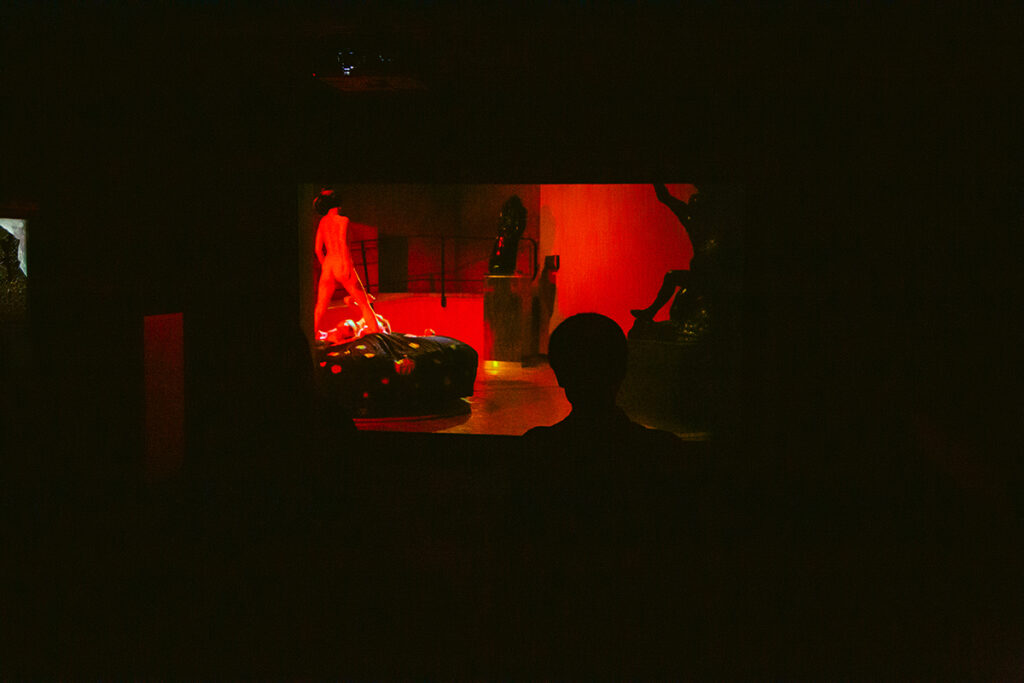
Program: Ohjo Bldg. (A)-⑥Mai Endo《Ritual for Omega and Alpha》 | This work was inspired by Edvard Munch's “Alpha and Omega” for the exhibition “Could This Be the Sleeping Room of Future Artists? This video work was inspired by Edvard Munch's “Alpha and Omega” for the exhibition “Could This Be the Room Where the Artists of the Future Sleep? Against the backdrop of Munch's cross-fertilization worldview, the film juxtaposes a nude performance at the National Museum of Western Art with the history of strip theater in Japan, and features Natsu Usami, an active stripper, and Endo himself.The film critiques Western art history and Japan's postwar strip culture from a feminist perspective, focusing on the female body. While the issue of the body remains deeply rooted in the entertainment district, the exhibition also emphasizes the peculiar context of the Kabukicho area, where the plans to invite the Kabuki-za Theater were abandoned and only its name remains. The exhibition makes us reconsider the boundary between art and entertainment in light of the historical context of postwar strip culture, which originated from the frame shows at the Teitoza theater in Shinjuku, and Kabuki, which spread from the brothels. (Photo by SHUN UEHARA)
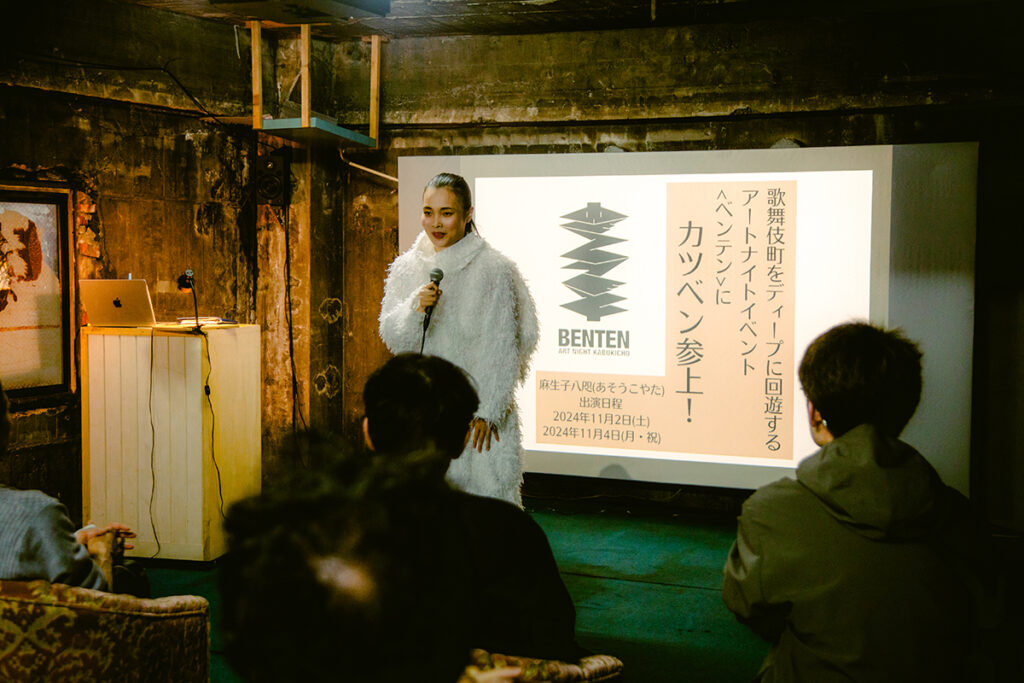
Program: Ohjo Bldg. (A)-⑦KATSUBENTEN Film Festival | Katsuben films are a unique culture found only in Japan, and are said to have developed from the traditions of rakugo and other forms of one-person storytelling, bunraku and other forms of storytelling that separate the audience from the subject, as well as from the demand for commentary on Western films. Although it was thought to be a form of the silent film era, it has been updated as a new form of expression by contemporary katsuben performers. The characteristic feature of this form is that it is not bound by a script, but transforms a single image into a variety of works. At this year's BENTEN Film Festival, Koyata Aso will be performing katsuben. She and her father, Yata Aso, run the “Katsuben Class” and are active in a wide range of activities, including English-language katsuben overseas, scriptwriting, and directing. He is also a valuable katsuben scholar, having studied cultural studies at the University of Tokyo's Graduate School of Arts. (Photo by SHUN UEHARA)
Program:WHITEHOUSE(B)-①Chiharu Shinoda Indah “Plaza of Emotion” | During the event, the WHITEHOUSE will be a 55-hour open plaza. Anyone can enter at any time, and it is also equipped with a rest area and a soup kitchen. It is a plaza where you or he can freely conceive of the public you think of. The plaza is full of someone's memories, traces and signs. Words that have been and words that will be, folded like parchment that has been rewritten over and over again, await you. Performances are held regularly in this plaza. First, “Twilight” by Chiharu Shinoda will be held at sunset. Then there is “XXX,” an unknown performance that will be created in the future. For those of you who are exhausted and seeking healing in Shinjuku, I extend my heartfelt sympathy. (Photo by SHUN UEHARA)
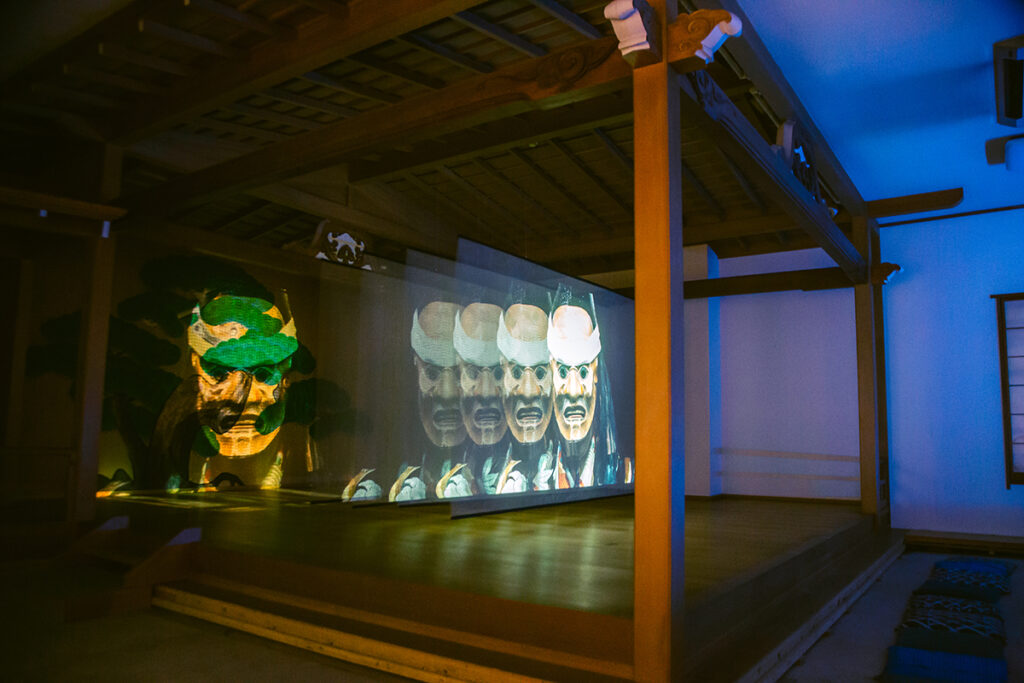
Program:Shinjuku kabukicho Noh Stage(C)-①Shiori Watanabe | A new Noh work “Iruma River” by Shiori Watanabe, Noboru Yasuda, Shingo Kato, and Dominique Chen, will be presented as a video installation by Kyoko Yasuhara a.k.a .Chinjao Rosu. Under the theme of “The Human Declaration,” “Iruma River” is a work that questions the liberation from the myth of the Emperor System and the illusion of a single race, as well as the coexistence of diversity and nature. The work depicts that the emperor, who was regarded as a symbol of anthropocentrism rather than a symbol of ecology after the modern era, returned to his human form after the defeat in World War II, but remains an official existence that differs from the common image of human beings. The installation will also feature Watanabe's new series in which portraits of emperors are created as glass masks. (Photo by SHUN UEHARA)
Program:Shinjuku kabukicho Noh Stage(C)-②Tianzhuo Chen | In this two-day performance series, Tianzhuo Chen and Siko Setyanto converge their distinct artistic visions to create a transformative experience on the Shinjuku Kabukicho Noh stage. Drawing from the rich traditions of Noh theater, each day presents an innovative exploration of movement and imagery, blending contemporary elements with traditional forms. On Day 1, Siko Setyanto collaborates with Kakushin Nishihara, a performer of the Satsuma Biwa Tsuruta style, guiding the audience on a meditative journey that evokes the fluidity of oceanic narratives. Their soundscapes enhance the performance’s atmosphere, enriching the emotional resonance of the storytelling. On Day 2, Kadapat will assume musical composition duties, introducing an idiosyncratic sonic landscape that complements and contrasts with the previous day’s experience. Together with Siko, they will explore the intricate relationships among the divine, fishermen, and ancestors, reflecting a complex ecosystem and spiritual connections. Through simplicity and stillness on the sacred Noh stage, Chen and his collaborators create a visual and musical maelstrom that intertwines tradition, ecology, spirituality, and technology, where the boundaries between reality and the spiritual realm dissolve, ultimately inviting audiences to engage with the profound connections within this multifaceted narrative. (Photo by SHUN UEHARA)
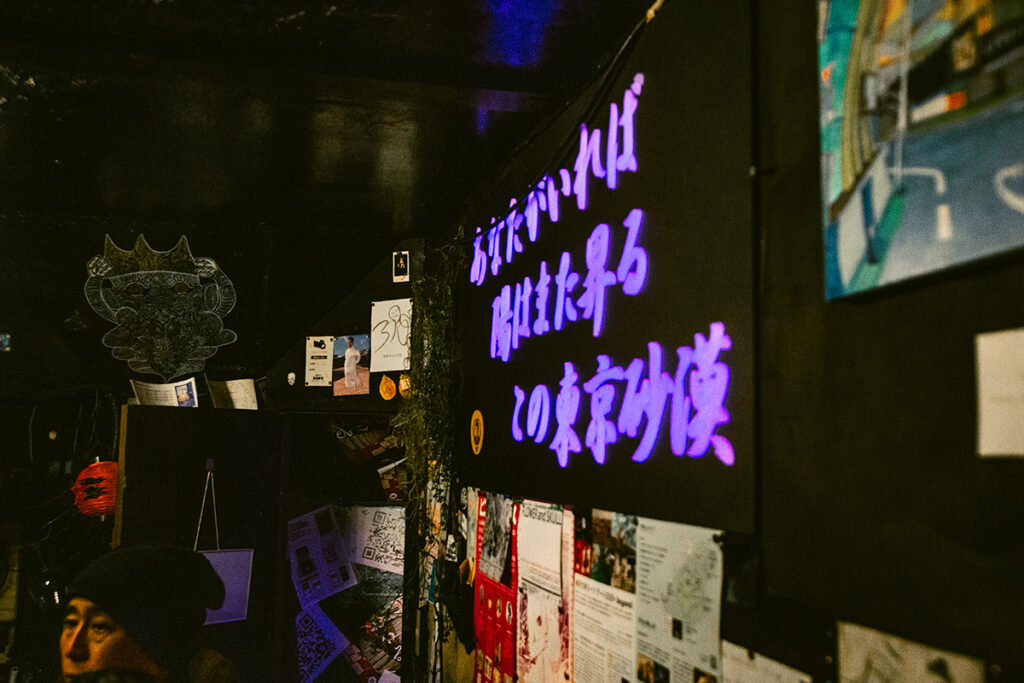
Program:Bar Tokyo Sabaku(D)-①“Obsessive Pending Plan” tomotosi | This three-dimensional work combines images of people who have obtained the same mirrors that influencers use within their social media posts and point their cameras at them (at tourist attractions in Tokyo, photographed back at the photographer from the perspective of the tourist attraction). (Photo by SHUN UEHARA)
Program:Bar Tokyo Sabaku(D)-② “Ochiru””Inoru”Works of Sound and Place by Hiroko Okada | Walking around the hidden spots of Kabukicho listening to the sounds and voices. Listen closely to the sounds emanating from your smartphone and see the invisible landscape. Narration by Yuko Okada. (Photo by SHUN UEHARA)
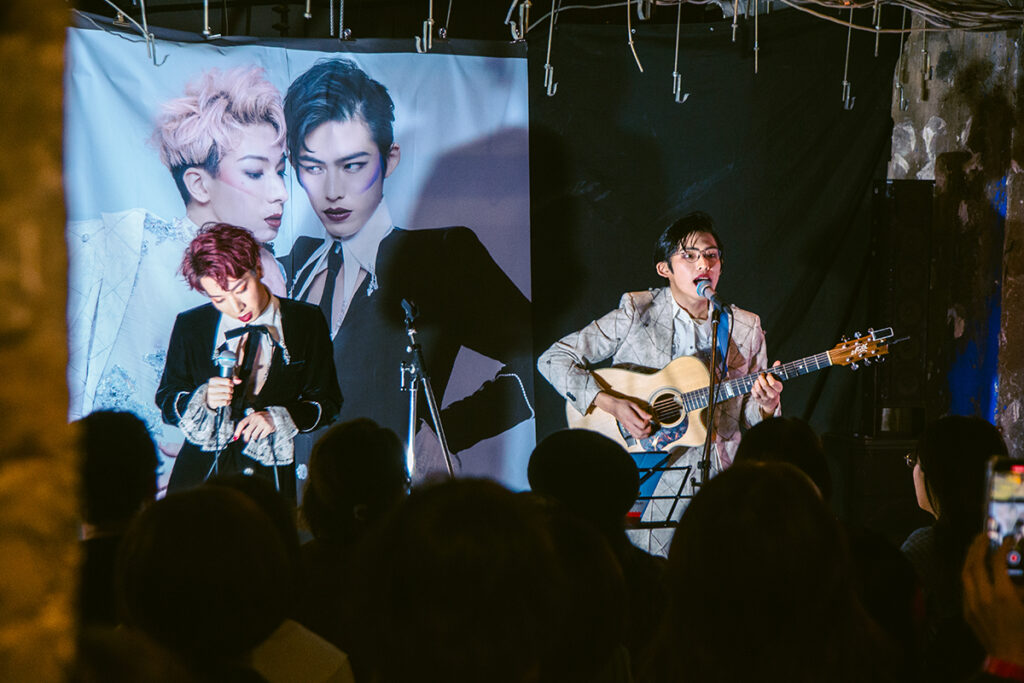
Program:DECAMERON(E)-①Private Super Starry Night new! | Yukkyun, a pop icon who calls for the awakening of the DIVA that lies dormant in the heart, and Ayano Sudo, who has captured the desire for transformation and ideal images that transcend gender while visiting the world of beauty in all ages and cultures. These two artists, who have collaborated and shared a sense of beauty, will invite Kimishima Oozora, who performed with Yukkyun on her single “Private Superstar,” to present a performance and visual depiction of a relationship that respects and celebrates each other, despite the many contradictions. (Photo by SHUN UEHARA)
Program:AWAKE(F)-①Fancy Fantasy! by FAMEME | FAMEME's first Japanese-language single “Fancy Fantasy!” will be unveiled to the public on a large screen in Kabukicho to commemorate the release of the music video. Group, a host club and restaurant operator in Kabukicho, Shinjuku, opened in 2018, and will hold a pop-up of the “Fancy Fantasy! by FAMEME” event, which was held in July 2024 and created a FAMEME whirlwind. The pop-up host club, which is open to all genders for a limited period of time, will unravel the pseudo-romance of heteronormativity from a queer perspective. (Photo by SHUN UEHARA)
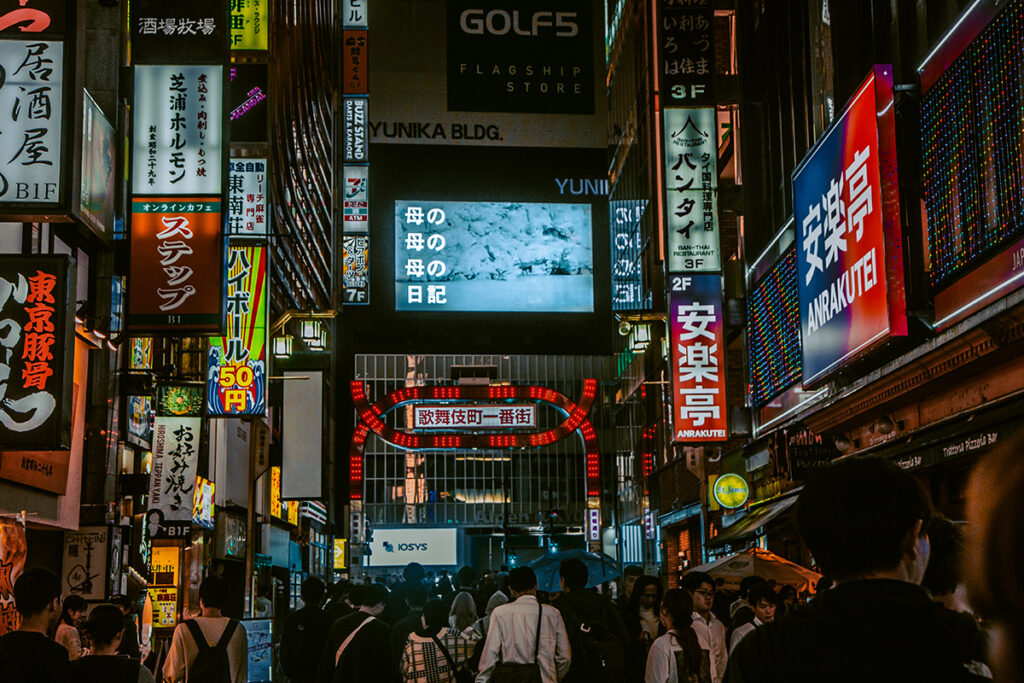
Program:YUNIKA VISION(G)-①Natsumi Aoyagi | YUNIKA VISION, Shinjuku's largest street vision, will feature a site-specific video by contemporary artist and poet Natsumi Aoyagi. The artist's words, characterized by her observations of familiar objects, and the unconsciousness of people passing through public spaces will depict the moments and atmosphere that intersect in the city. Details, including the date and time, will be announced later on BENTEN's Instagram and website. (Photo by SHUN UEHARA)
Program:A certain place in Shinjuku 2-chome “Summer Rental” Ei Arakawa-Nash | A short play “Summer Rental,” written by philosopher Masaya Chiba and contributed to an installation at the Arakawa Nash Medical Exhibition (The National Art Center, Tokyo), will be performed by actors on the street in Shinjuku 2-chome. (Photo by SHUN UEHARA)
Program:Collaborative program (sponsored by Kabukicho Shopping Disrict Association) Area Relations, KABUKICHOSAI 2024 | The Kabukicho Matsuri, which has been held at CineCity Plaza since 2021 and has attracted attention every year for its chaotic and energetic performances that allow visitors to experience Kabukicho's unique atmosphere, will be held at the same time as BENTEN 2024. (Photo by SHUN UEHARA)
BENTEN 2024 (2024)

Concept

1. Art is in the pARTy
Parties are the essence of the Kabukicho neighborhood.
The city has focused on party culture in order to serve a momentary and festive evening.
This can also be said from an artistic perspective. Postwar Shinjuku was the stage on which happenings such as “Zero Dimension (Zero Jigen),” “Neo-Dadaism Organizers,” “Shinjuku Shonen Art,” and “Jokyo Gekijo Theater” broke out in the public sphere and in crowded buildings. They were transient and performative events such as rituals, festivals, and plays rather than exhibitions. The fact that Kabukicho is not a town that has sold goods, but rather things, services, and bodies, the context of expression in ...... Shinjuku overlaps beautifully with the intangible nature of the town.

Even in the current state of art, there is a growing emphasis on the collaborative and experiential nature of the arts. At Documenta 15, artistic director ruangrupa's theme was “Make Friends, Not Art,” a message that shifted the focus of art from the supremacy of artworks and artists to human relationships. Art is in the pARTy” developed by Chim↑Pom from Smappa!Group is a counter to the universality of art, Group's “Art is in the pARTy” is a counter to the universality of art and a thesis that expresses the current collectivism. Unlike “Make Friends, Not Art,” however, “Art is in the party (human relations ≒ ‘make friend’)” is a statement that sees the possibility of human relations in art.

2. Peace
Parties, however, can be a breeding ground for social problems because of their hedonistic nature. This is especially true when it is combined with the supremacy of sales. The entertainment districts have been criticized many times, but the aforementioned festival culture is rather an anarchic one that is at odds with capitalism and authoritarianism. In particular, the “Folk Guerrilla in Shinjuku” of the 1960s are legendary for their anti-war parties that confronted authority and shouted anti-war protests.
The background to the acceptance of such political and radical culture is the unique capacity of the entertainment district. The origin of the Shinjuku area in the 1920s was an area where prominent anarchists and communists lived, and where Japan's first black market was established after World War II. The context is supported by the fact that Shinjuku Ni-Chome, the largest LGBTQ+ town in Japan, has cultivated sexual diversity. Despite its dangerous aspects, Kabukicho has developed into a place that celebrates freedom, and can be seen as the embodiment of “symbiosis” in which people live with minorities and others. Peace from Kabukicho. This means that the “nightlife district,” which has responded to postwar democracy by consuming freedom, will step forward and become a party to renewing the existing image of peace. The unexpectedness of the message emanating from the entertainment district, which has a dark impression, will serve as a hook to propose a proposal for the tragic times.

3. Arts/Entertainment
The name “Kabukicho” comes from the fact that local residents tried to attract the Kabuki-za Theater to the area as part of a reconstruction plan for the town, which had been burned down after the war. As a result, the Kabuki-za did not come, and only the name remained. Considering how kabuki, Noh, and other traditional Japanese performing arts were originally born out of the integration of the sacred and the secular, as if they were beggars on the riverbanks, and grew up in the downtown areas such as Yoshiwara, the gap between the current conservative performing arts and their roots is strongly reflected in this case.
The beginning of the performing arts in Japan is said to be a strip by Amenouzume, the god of the arts in the Kojiki and Nihonshoki. It is said that when the sun goddess Amaterasu hid in Iwato and the world lost its light, the gods held a feast in front of Iwato, and Amenouzume danced naked on top of her body, which excited all the gods. It is described that light was restored to the world when Amateru opened the door of Iwato out of concern for its bustling outside. In considering the art of Kabukicho, high art alone is not enough. In addition to the entertainment district culture of pole dancing, drag queens, and striptease, there is also the underground theater of the Jokyo Gekijo Theater, which is set in the Hanazono Shrine, a shrine dedicated to the performing arts. In addition to such entertainment-oriented culture as pole dancing, drag queens, and striptease, the performing arts as a form of radical physical expression, such as the underground theater of the Situation Theater and the show tent, have continued to influence the arts. The redefinition of art and performing arts has long been shaking Japanese art as a uniquely Japanese issue (faith, ecology, social class, etc.) that cannot be interpreted in a Western context. The awareness of these issues that art in Kabukicho will continue to transmit to the world in the future will lead to a redefinition of the values of art concerning the West and the East.

4. Origin of the title
The title “BENTEN” comes from Kabukicho Park/Kabukicho Benzaiten, which has been protected as a sacred place in Kabukicho. Known as the god of entertainment, it is also the god of water, and is enshrined throughout Japan as a remnant of what was once a waterfront. The inscription on the erected monument reads as follows. The inscription reads, “Kabukicho used to be called Omura-no-mori (Omura Forest), and there was a large swamp, and Benten-sama was enshrined in the swamp area. Takako Okayasu, a believer, evacuated with Benten-sama on her back, and later moved it to the Mineshima family, who were the first to develop Kabukicho. After the war, Kihei Suzuki, the head of the town council, launched a reconstruction plan and worked with collaborators to rebuild the town, and it was decided that the Benten site would be preserved in its original state. The Benten-do Reconstruction Dedication Association was formed and pledged to worship Kabuki Benten as the guardian deity of the community forever.

BENTEN 2024 Artistic Director:
Chim↑Pom from Smappa!Group

---

Curators
Chim↑Pom from Smappa!Group, Yuko Yamamoto, Tomohito Wakui, Sanghae Kwon, Kaho Ikeda, Tomoko Yabumae