


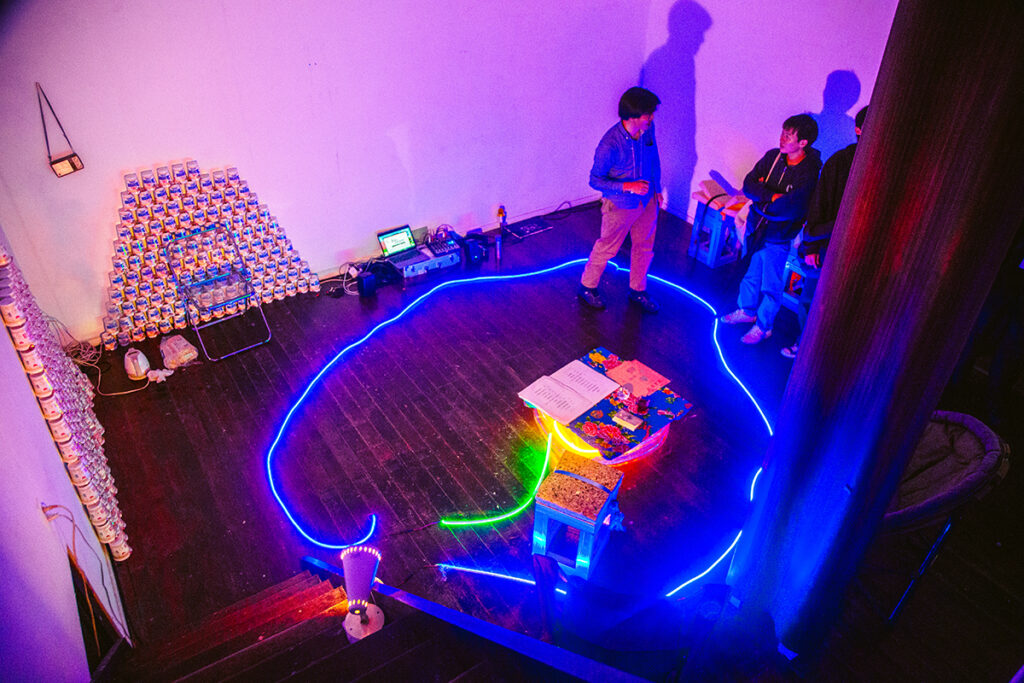
Concept
1. Art is in the pARTy
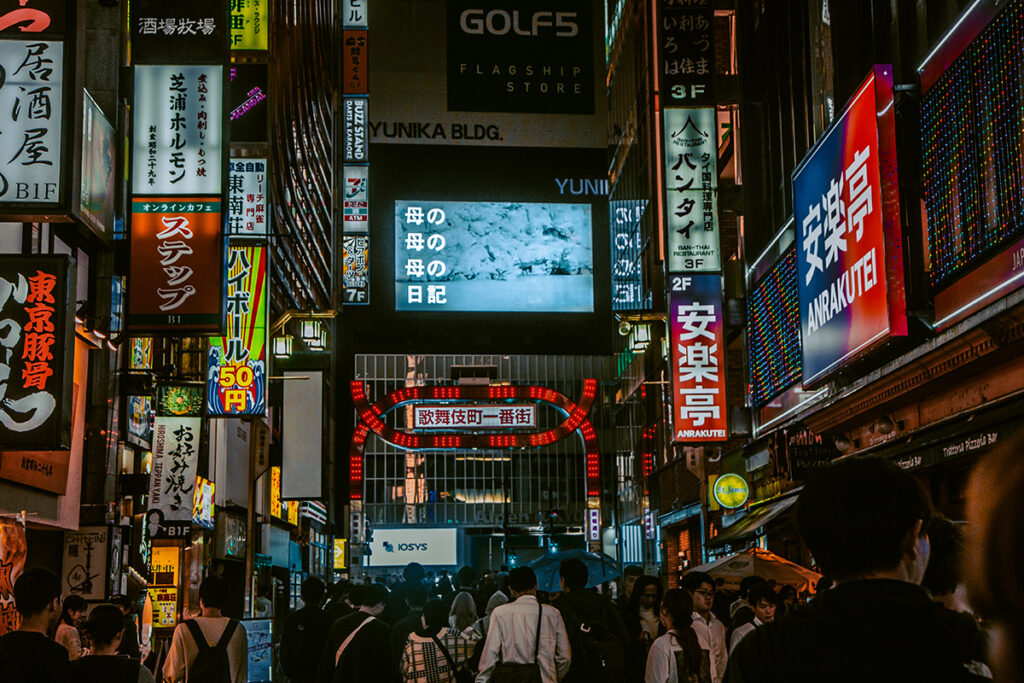
Parties are the essence of the Kabukicho neighborhood.
The city has focused on party culture in order to serve a momentary and festive evening.
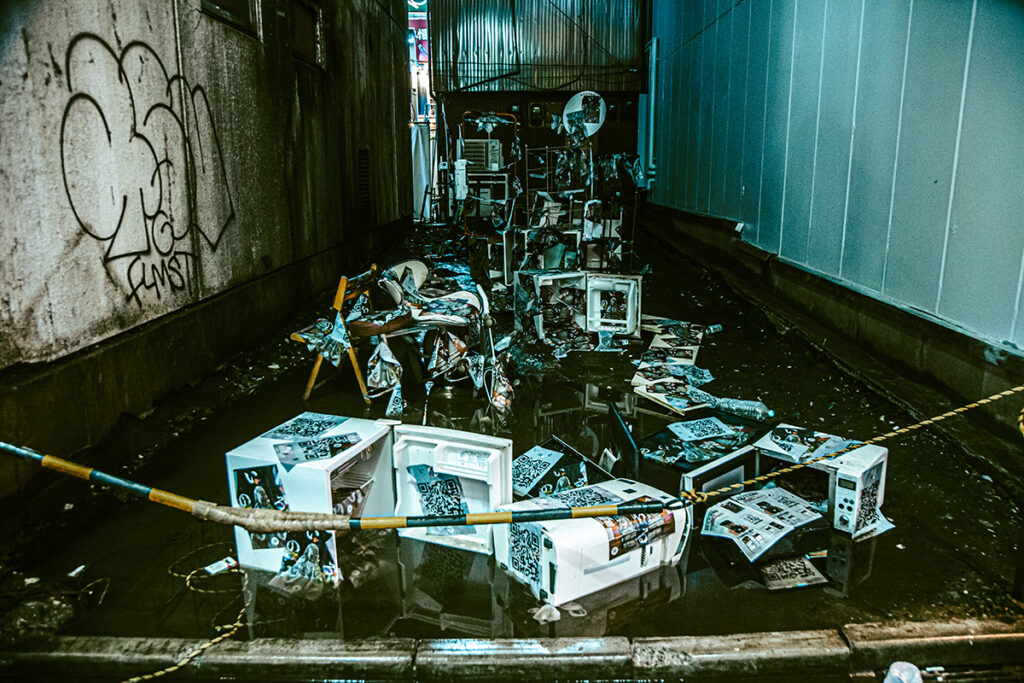
This can also be said from an artistic perspective. Postwar Shinjuku was the stage on which happenings such as “Zero Dimension (Zero Jigen),” “Neo-Dadaism Organizers,” “Shinjuku Shonen Art,” and “Jokyo Gekijo Theater” broke out in the public sphere and in crowded buildings. They were transient and performative events such as rituals, festivals, and plays rather than exhibitions. The fact that Kabukicho is not a town that has sold goods, but rather things, services, and bodies, the context of expression in ...... Shinjuku overlaps beautifully with the intangible nature of the town.
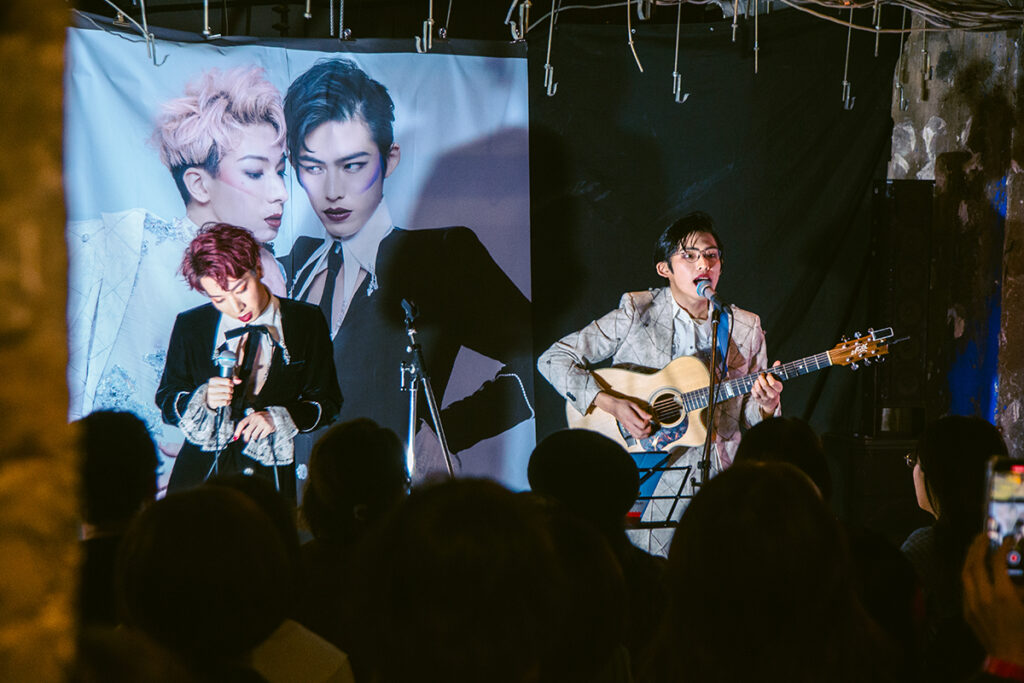
Even in the current state of art, there is a growing emphasis on the collaborative and experiential nature of the arts. At Documenta 15, artistic director ruangrupa's theme was “Make Friends, Not Art,” a message that shifted the focus of art from the supremacy of artworks and artists to human relationships. Art is in the pARTy” developed by Chim↑Pom from Smappa!Group is a counter to the universality of art, Group's “Art is in the pARTy” is a counter to the universality of art and a thesis that expresses the current collectivism. Unlike “Make Friends, Not Art,” however, “Art is in the party (human relations ≒ ‘make friend’)” is a statement that sees the possibility of human relations in art.
2. Peace
Parties, however, can be a breeding ground for social problems because of their hedonistic nature. This is especially true when it is combined with the supremacy of sales. The entertainment districts have been criticized many times, but the aforementioned festival culture is rather an anarchic one that is at odds with capitalism and authoritarianism. In particular, the “Folk Guerrilla in Shinjuku” of the 1960s are legendary for their anti-war parties that confronted authority and shouted anti-war protests.
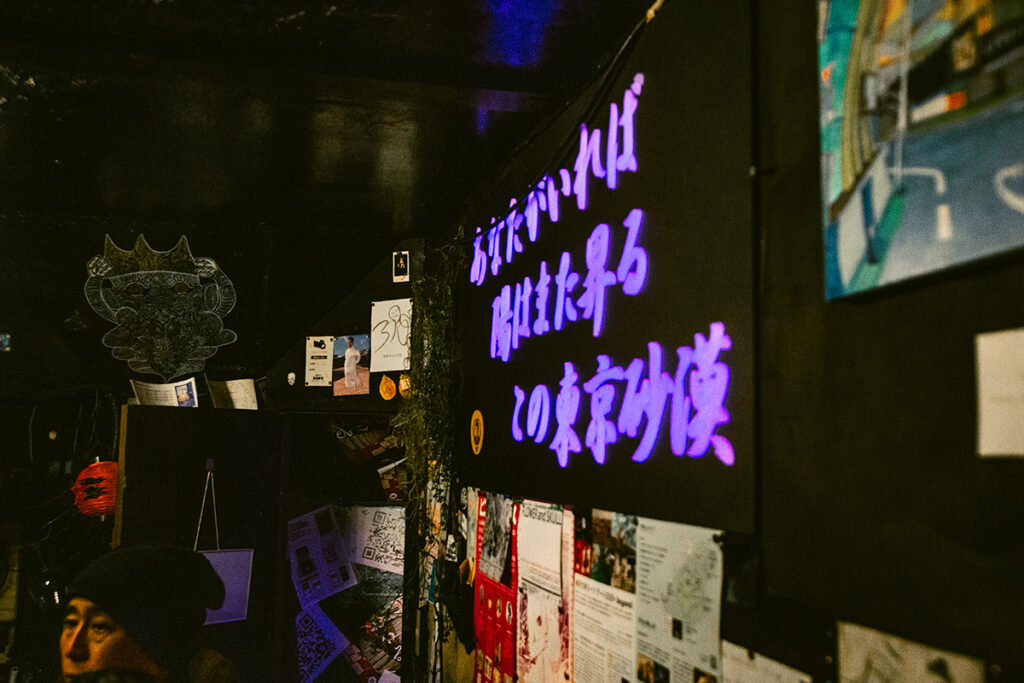
The background to the acceptance of such political and radical culture is the unique capacity of the entertainment district. The origin of the Shinjuku area in the 1920s was an area where prominent anarchists and communists lived, and where Japan's first black market was established after World War II. The context is supported by the fact that Shinjuku Ni-Chome, the largest LGBTQ+ town in Japan, has cultivated sexual diversity. Despite its dangerous aspects, Kabukicho has developed into a place that celebrates freedom, and can be seen as the embodiment of “symbiosis” in which people live with minorities and others. Peace from Kabukicho. This means that the “nightlife district,” which has responded to postwar democracy by consuming freedom, will step forward and become a party to renewing the existing image of peace. The unexpectedness of the message emanating from the entertainment district, which has a dark impression, will serve as a hook to propose a proposal for the tragic times.
3. Arts/Entertainment
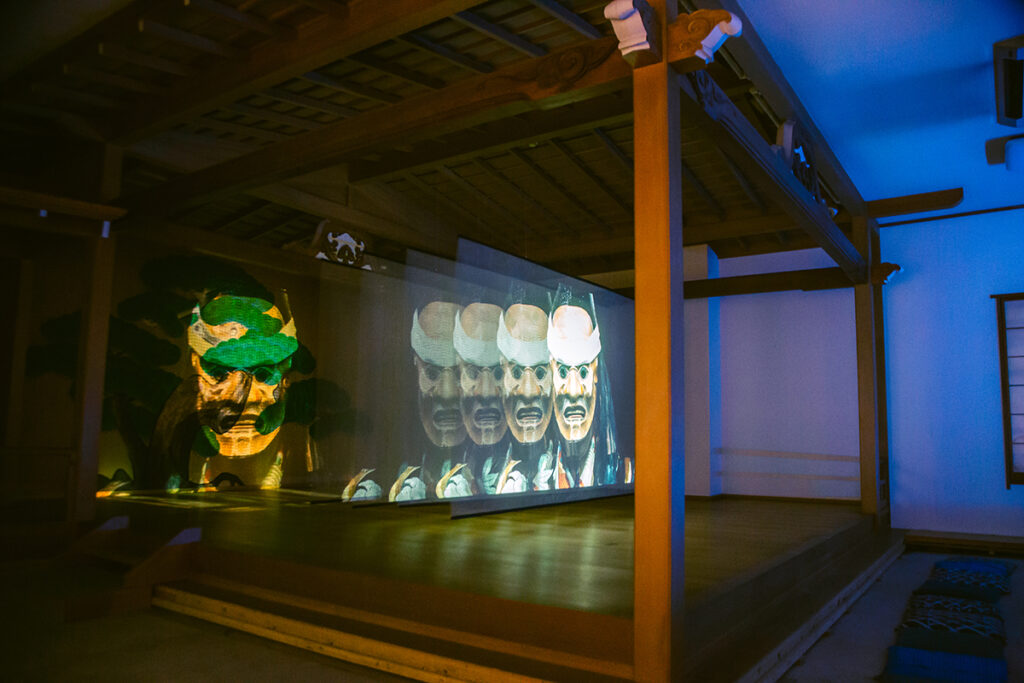
The name “Kabukicho” comes from the fact that local residents tried to attract the Kabuki-za Theater to the area as part of a reconstruction plan for the town, which had been burned down after the war. As a result, the Kabuki-za did not come, and only the name remained. Considering how kabuki, Noh, and other traditional Japanese performing arts were originally born out of the integration of the sacred and the secular, as if they were beggars on the riverbanks, and grew up in the downtown areas such as Yoshiwara, the gap between the current conservative performing arts and their roots is strongly reflected in this case.
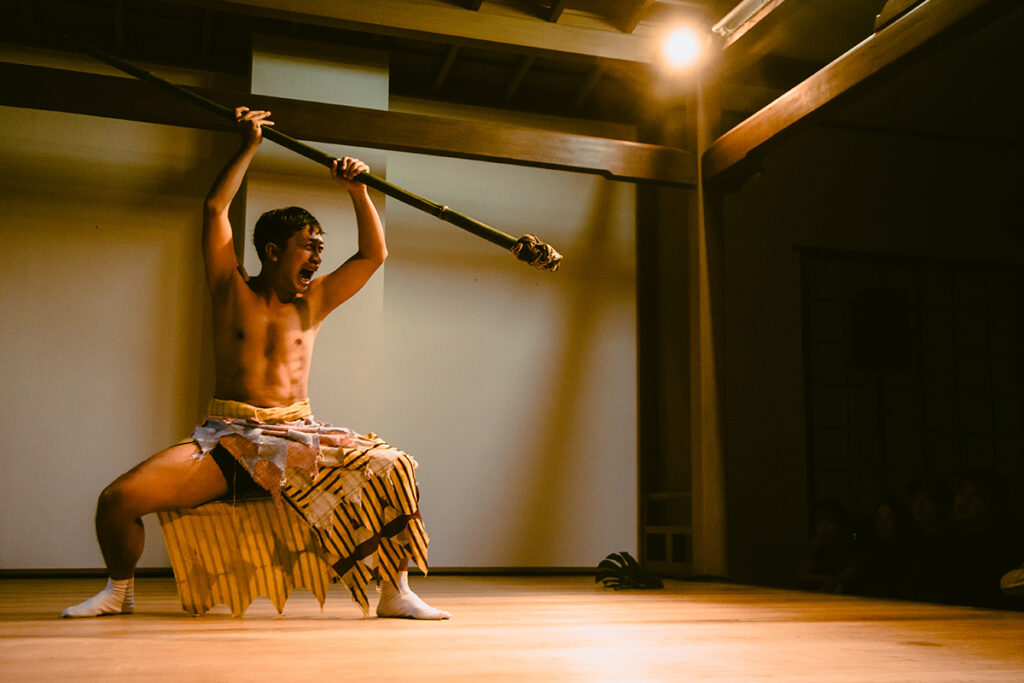
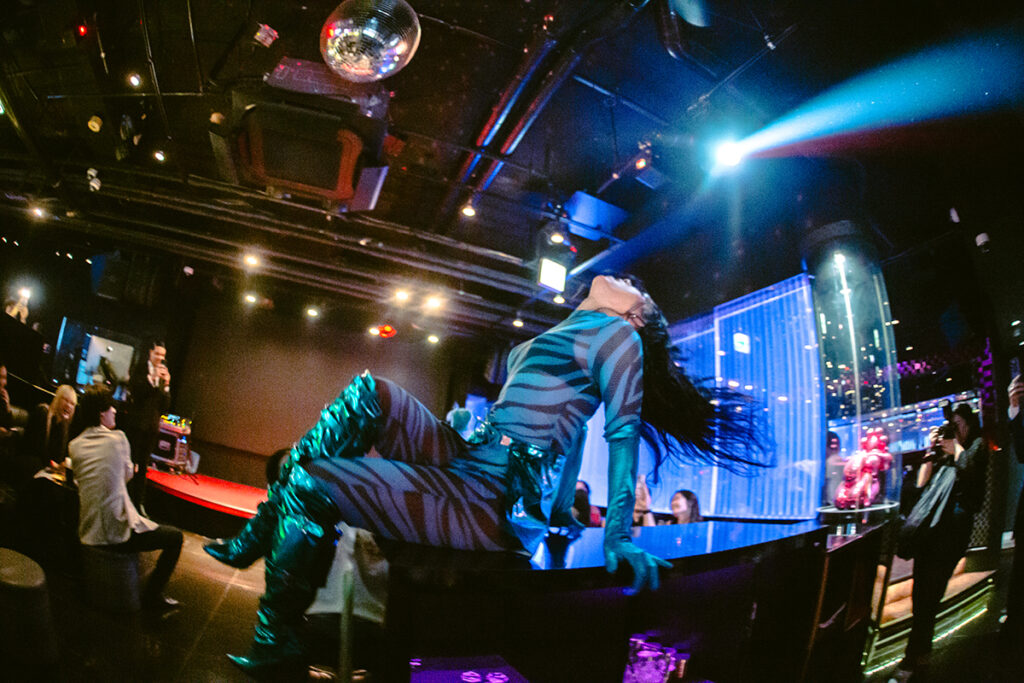
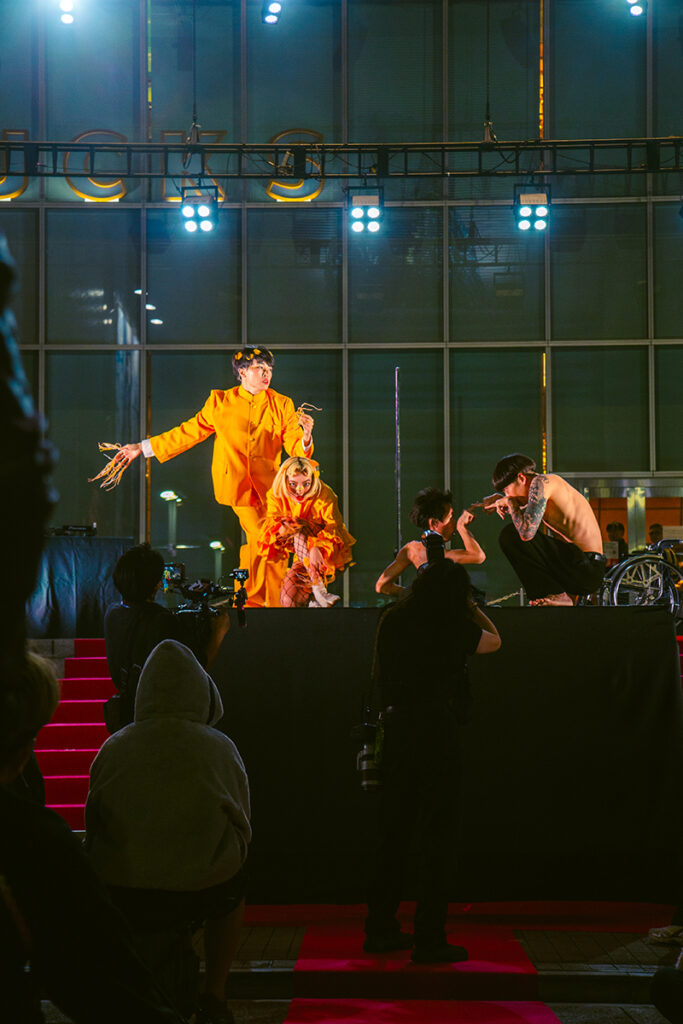
The beginning of the performing arts in Japan is said to be a strip by Amenouzume, the god of the arts in the Kojiki and Nihonshoki. It is said that when the sun goddess Amaterasu hid in Iwato and the world lost its light, the gods held a feast in front of Iwato, and Amenouzume danced naked on top of her body, which excited all the gods. It is described that light was restored to the world when Amateru opened the door of Iwato out of concern for its bustling outside. In considering the art of Kabukicho, high art alone is not enough. In addition to the entertainment district culture of pole dancing, drag queens, and striptease, there is also the underground theater of the Jokyo Gekijo Theater, which is set in the Hanazono Shrine, a shrine dedicated to the performing arts. In addition to such entertainment-oriented culture as pole dancing, drag queens, and striptease, the performing arts as a form of radical physical expression, such as the underground theater of the Situation Theater and the show tent, have continued to influence the arts. The redefinition of art and performing arts has long been shaking Japanese art as a uniquely Japanese issue (faith, ecology, social class, etc.) that cannot be interpreted in a Western context. The awareness of these issues that art in Kabukicho will continue to transmit to the world in the future will lead to a redefinition of the values of art concerning the West and the East.
4. Origin of the title
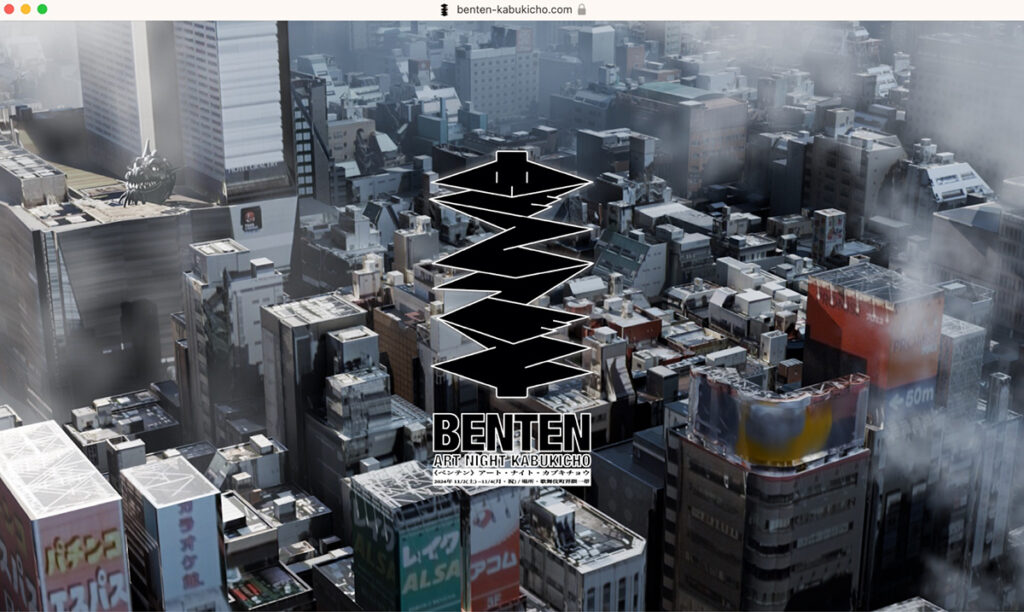
The title “BENTEN” comes from Kabukicho Park/Kabukicho Benzaiten, which has been protected as a sacred place in Kabukicho. Known as the god of entertainment, it is also the god of water, and is enshrined throughout Japan as a remnant of what was once a waterfront. The inscription on the erected monument reads as follows. The inscription reads, “Kabukicho used to be called Omura-no-mori (Omura Forest), and there was a large swamp, and Benten-sama was enshrined in the swamp area. Takako Okayasu, a believer, evacuated with Benten-sama on her back, and later moved it to the Mineshima family, who were the first to develop Kabukicho. After the war, Kihei Suzuki, the head of the town council, launched a reconstruction plan and worked with collaborators to rebuild the town, and it was decided that the Benten site would be preserved in its original state. The Benten-do Reconstruction Dedication Association was formed and pledged to worship Kabuki Benten as the guardian deity of the community forever.
BENTEN 2024 Artistic Director:
Chim↑Pom from Smappa!Group
---
Curators
Chim↑Pom from Smappa!Group, Yuko Yamamoto, Tomohito Wakui, Sanghae Kwon, Kaho Ikeda, Tomoko Yabumae